
- Home
- >
- Electric Reactors
- >
- What Are dv/dt Filter Reactors and How Do They Protect VFD Systems?
What Are dv/dt Filter Reactors and How Do They Protect VFD Systems?
August 21, 2026 | By Chris Wang

To improve industrial energy efficiency, more and more global manufacturing plants now apply adjustable frequency drives (AFDs/VFDs) and high-speed IGBTs (Insulated Gate Bipolar Transistors). However, those switching technologies also bring high-frequency harmonics and extremely high voltage change rates (dv/dt).
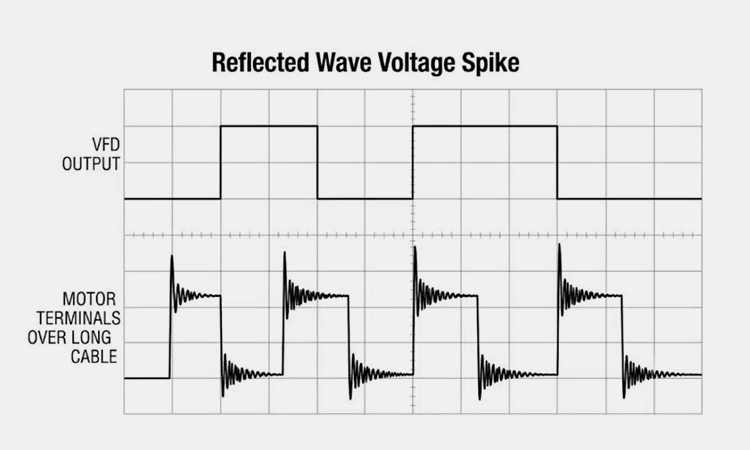
Long-running cables also bring the “reflected wave phenomenon.” The severe voltage spikes at both the inverter and motor terminals will cause insulation breakdown and costly motor winding failures.
So, understanding dv/dt filter reactors and knowing how to protect critical capital equipment is essential for you.
1. What Is a dv/dt Filter Reactor?
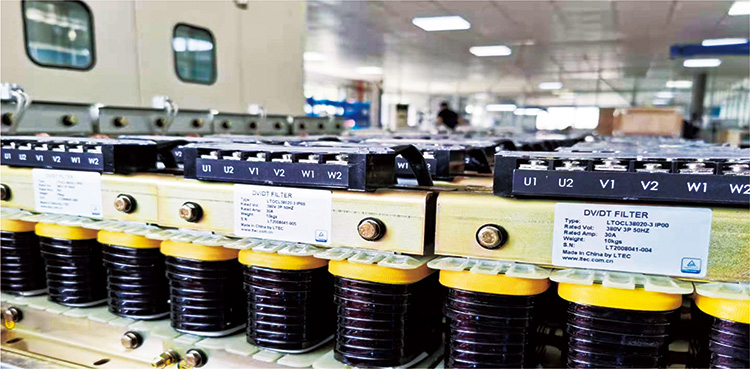
As a specialized inductive device installed between the VFD output terminals and the motor, the dv/dt filter reactor is widely used to control high voltage gradients and smooth rapid electrical transitions.
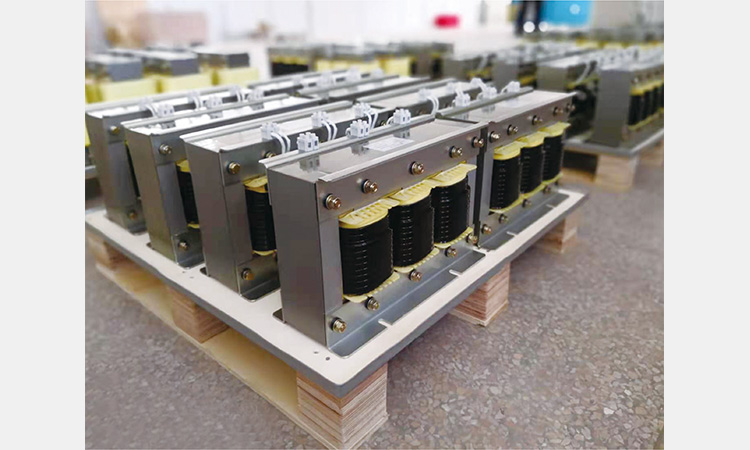
Core Construction Features
- Three-phase iron core for high linearity.
- Do not saturate even under heavy transient overloads.
Working Principle
- Introducing a controlled amount of inductive reactance into the output circuit.
- Then slowing down the voltage rise rate.
- Keeping the dv/dt well within safe thresholds (typically below $500\text{ V}/\mu\text{s}$).
2. How Do Reflected Waves and High dv/dt Damage VFD Systems?

Before learning about the dv/dt filter reactor, let’s check out the physical challenges created by modern VFD output waveforms:
Ultra-Fast IGBT Switching Dynamics
Creating ultra-fast transient voltage pulses that travel down the motor cables, modern IGBTs now switch at speeds up to $8000\text{ V}/\mu\text{s}$.
The Reflected Wave Phenomenon
If the cable lengths exceed critical thresholds (typically over 20 feet or tens of meters), the impedance mismatches cause the pulse to reflect toward the drive. In the end, there are high-amplitude standing waves and voltage spikes.
Severe Equipment Impact
Insulation Breakdown: The repeated high-voltage stress harms motor coil insulation. In the end, it leads to partial discharges and premature winding failure. To get rid of these risks and failures, you can choose VFD harmonic filters or output reactors.
Thermal Stress: Harmonics bring heat and noise.
Bearing Damage: Discharging through motor bearings, the capacitive currents cause fluting and premature bearing failure.
3. How do dv/dt Filter Reactors Protect VFD Systems and Motors?
Protecting the entire motor drivetrain, deploying a dv/dt filter reactor can deliver:
Mitigating Voltage Rise Rates (dv/dt)
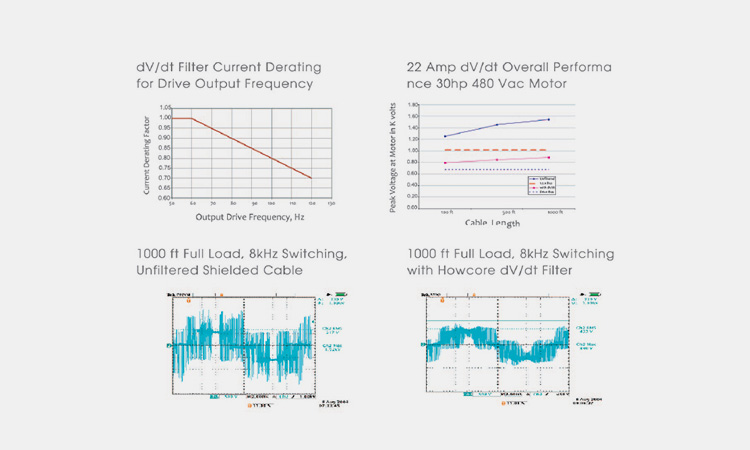
Dampening voltage steps, the filter reactor relieves sensitive motor winding insulation.
Limiting Terminal Peak Voltages
Suppressing voltage peaks under safe operating limits, below 1000V for system voltages under 575V.
Enhancing Operational Reliability
Lowering high-frequency harmonic losses and thermal stress, the dv/dt filter reactor helps extend your motor lifespans and reduce equipment downtime.
Suppressing Electromagnetic Interference (EMI/RFI)
By smoothing out output waveforms, it minimizes high-frequency noise. For those problems, you can explore our advanced sine wave filters.
4. Engineering Best Practices: Selection and Installation Guidelines
How to maximize the dv/dt filter reactor’s effectiveness? Here are the guidelines for your reference.
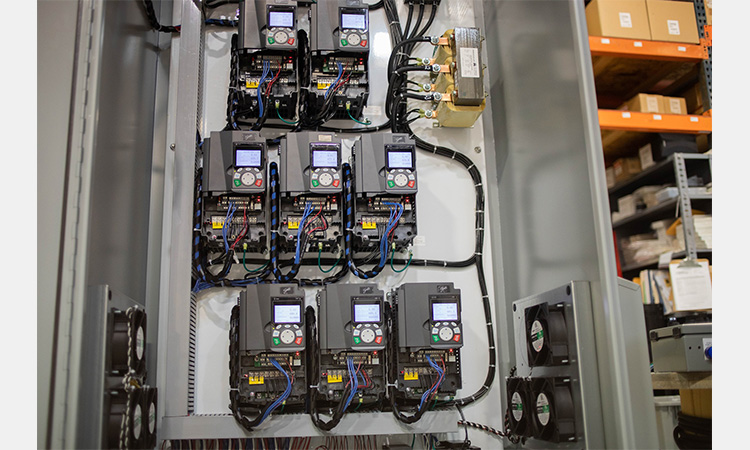
Carrier Frequency Alignment
VFDs always prefer to run at high default carrier frequencies like 12 kHz. If you install a dv/dt filter reactor, it is better to change and lock the VFD’s carrier frequency. It will make it easy to fit within the reactor’s safe operating range, normally running between 2 kHz and 4 kHz.
Managing Cable Length and Sizing
Never make motor cables extra large to avoid voltage drop. If you use oversized cables, it will greatly increase stray capacitance and common-mode currents. In the end, the stress can overheat the reactor core.
Proper Physical Installation
Make sure that the reactor is as close as possible right next to the output terminals of the VFD.
Leave enough space for proper airflow (such as keeping at least a 100 mm clearance at both the top and the bottom).

Conclusion
When running variable frequency drives with very long cables, you may face challenges such as voltage reflection waves and extremely fast voltage spikes (dv/dt). To avoid that, investing a top-grade dv/dt filter reactor is much worth. Acting as a safety shield, the reactors can keep heavy industrial motors safe with smooth long-term running without unexpected shutdowns. Reach us now if you are looking for the right dv/dt filter reactor solution.
FAQs
What is the maximum motor cable length that requires a dv/dt filter reactor?
Generally, if your motor cable lengths exceed 20 feet (approx. 6 meters) for smaller motors, or 50 to 100 feet for larger drives, then it is strongly recommended for a dv/dt filter reactor. Otherwise, the long-run application will threaten your motor insulation.
Can a dv/dt filter reactor completely replace a sine wave filter?
Not always.
For standard inverter-duty motors, the dv/dt filter reactor can limit the dv/dt rate and bring voltage peaks to safe levels.
However, for extreme cable lengths (often over 1,000 feet), what you need is a sine wave filter. It can help you convert the PWM output into a clean sinusoidal waveform.
How does the VFD carrier frequency affect dv/dt reactor performance?
High carrier frequencies increase switching frequency losses and thermal stress. So, to ensure the optimal thermal balance and filtering efficiency, you can operate the VFD within the manufacturer’s recommended range (typically 2 kHz to 4 kHz).
What is the difference between a dv/dt reactor and an AC line reactor?
Both for VDFs application, they are different in:
AC Line Reactor
Installed on the input side (line side) of a VFD, the AC line reactor is mainly applied to mitigate low-frequency current harmonics.
dv/dt Reactor
Conversely, installed on the output side (load side) between the VFD and the motor, the dv/dt reactor protects against high-frequency voltage reflections and steep voltage gradients.
How does motor horsepower (HP) affect the need for a dv/dt filter?
When voltage spikes happen, smaller motors are actually more fragile. They are easily damaged by fast voltage surges and reflection waves. So smaller motors also need a dv/dt filter, even when they are connected by much shorter cables compared to larger motors.
Can oversized motor cables cause dv/dt reactor overheating?
Sure.
Oversizing motor cables increases total cable capacitance and common-mode leakage currents. So, it leads to abnormal thermal buildup and overheating in the reactor core.
The Ultimate Guide to Filter Reactors: Types, Applications, Sizing
Learn how filter reactors protect PFC capacitors from harmful harmonics, prevent thermal overload, and stabilize power grids. Read our full technical guide now.
AC Line Reactor vs Filter Reactor: Which One Do You Need for Your VFD System?
As Variable Frequency Drives (VFDs) drive modern industrial automation, harmonic distortion becomes a key challenge. This guide compares AC Line Reactors and Detuned Harmonic Filter Reactors, breaking down their core principles, installation points, and THDi mitigation to help you choose the right component.
Detuned Reactor vs. Harmonic Filter: Which One Do You Need for Your Facility?
Confused between detuned reactors and harmonic filters? This ultimate guide details the technical differences, installation topologies, and selection criteria to help you protect PFC capacitors, prevent resonance, and meet strict IEEE 519 standards.
The Factory Manager’s Guide to Harmonic Mitigation: Stop Invisible Power Waste and Equipment Burnouts
In this guide, we will break down the harmonics and harmonic mitigation for you. You may know how it impacts your wallet and how to fix it.
Table of Contents
Send Your Inquiry Today