Welcome to your quick guide on power harmonics! When everyday machinery like factory drives and power supplies draw electricity in sudden bursts, they create unseen high-frequency electrical garbage known as harmonics. If left unchecked, this distortion causes equipment to overheat, fuses to trip unexpectedly, and your machines to wear out fast.
This guide breaks down what causes harmonics, why the 3rd, 5th, and 7th frequencies matter, and how tools like active harmonic filters, detuned reactors, and VPI-insulated transformers keep your factory running safely and efficiently. Explore it now!
In a healthy electrical system, AC power flows as a clean, steady wave at a standard fundamental frequency ($f_1$) of 50 Hz or 60 Hz. But when electricity interacts with modern non-linear loads like variable frequency drives (VFDs), it generates extra, higher-frequency waves that ride on top of your main power supply. These are harmonics.
To map them out, engineers use the harmonic order ($h$), which is simply a multiple of your base power frequency, using the formula:
$$f_h = h \times f_1$$
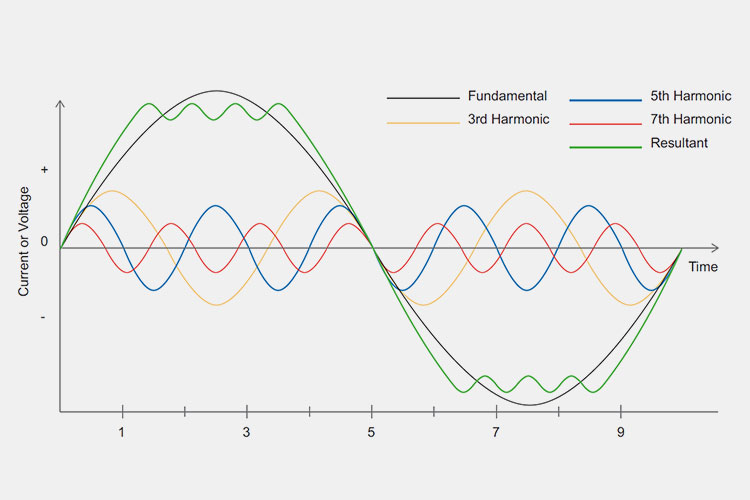
For example, in a standard 50 Hz industrial grid:
3rd Harmonic: $3 \times 50\text{ Hz} = 150\text{ Hz}$
5th Harmonic: $5 \times 50\text{ Hz} = 250\text{ Hz}$
7th Harmonic: $7 \times 50\text{ Hz} = 350\text{ Hz}$
When these extra frequencies mix into your electrical supply, they distort the clean sine wave, putting heavy strain on your industrial equipment and power distribution network.
To understand harmonics, picture how electricity moves. In an ideal plant, voltage and current flow as a Pure Sine Wave—a smooth, steady 50 Hz or 60 Hz wave doing the heavy lifting.
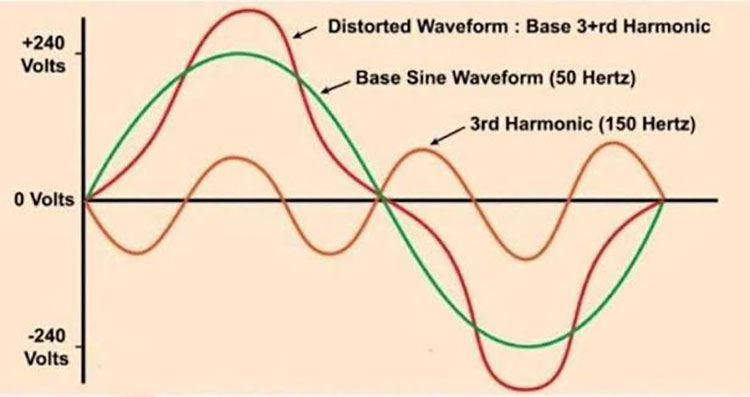
When non-linear loads join the mix, they introduce higher frequencies that ride along with the main power:
Fundamental Component
Your clean, primary 50 Hz or 60 Hz wave supplying your main operating power.
Harmonic Components
Unwanted, higher-frequency waves (like the 3rd, 5th, or 7th harmonics) running right alongside it.
When these combine, they create a Distorted Waveform. Instead of a smooth curve, your power wave looks flattened at the peaks or jagged. That physical distortion is what quietly drives up heat, stresses your transformers, and causes unexpected equipment trouble.
Harmonics don’t happen by accident—they are caused by modern electrical equipment that draws power in sudden, choppy bursts instead of a smooth wave. These are known as non-linear loads.
The most common equipment behind these issues includes:
Variable Frequency Drives (VFDs)
Used everywhere to control motor speeds, but their internal switching injects heavy current harmonics into your grid.
Rectifiers and Power Converters
Convert AC to DC for industrial drives, naturally producing the 5th and 7th harmonics.
UPS Systems
Uninterruptible power supplies that draw non-linear currents during battery charging.
Switching Power Supplies
Found in computers and electronics, drawing rapid current pulses that create triplen harmonics.
Renewable Energy Inverters
Solar and wind inverters that use high-frequency switching and can distort the grid interface.
Arc Furnaces and Welders
Heavy industrial tools that cause erratic, severe harmonic disruption.
Saturated Transformers
Operating magnetic cores near their limits, forcing out prominent third harmonics.
Nonlinear Load | Typical Harmonic Issue |
VFD | Current harmonics |
UPS | Input current distortion |
Rectifier | 5th/7th harmonics |
PV inverter | Switching-related distortion |
Data center PSU | Triplen harmonics |
Arc furnace | Severe harmonic distortion |
It helps to separate the terms: harmonics are the individual high-frequency currents riding on your lines, while harmonic distortion is the actual mess they make by twisting and deforming your clean power wave.
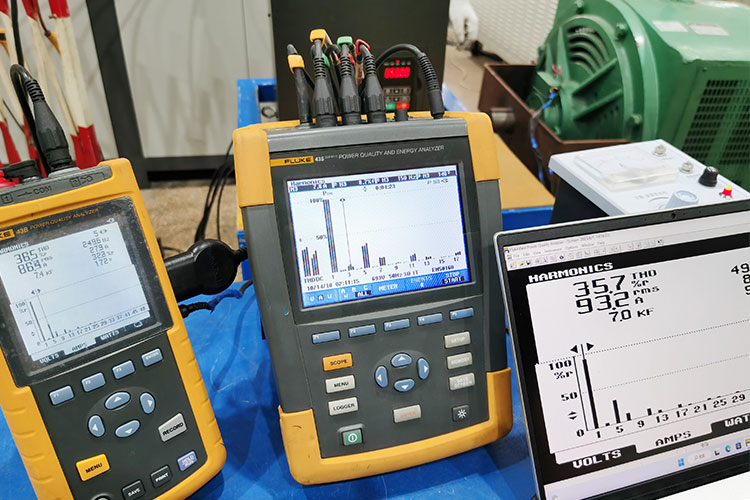
To measure how badly your power is warped, engineers use Total Harmonic Distortion (THD):
$$\text{THD} = \frac{\sqrt{H_2^2 + H_3^2 + \dots + H_n^2}}{H_1} \times 100\%$$
In everyday facility management, this breaks down into two vital metrics:
THDi (Current Total Harmonic Distortion)
Measures the distortion in the current drawn by your equipment. High THDi pumps extra heat into your cables and distribution transformers, accelerating wear and tear.
THDu (Voltage Total Harmonic Distortion)
Measures the distortion across your entire power bus. High THDu affects everything connected to that line, risking equipment malfunctions or premature insulation failure.
While electrical systems can generate dozens of harmonic orders, a few specific frequencies cause the most trouble in industrial environments:
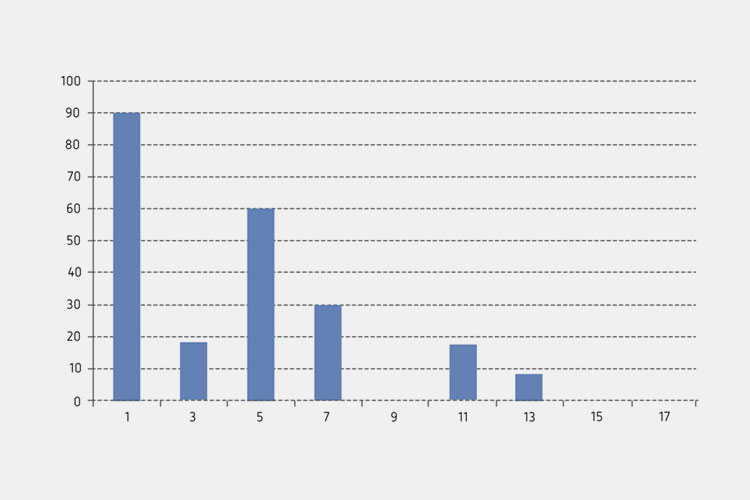
The 3rd Harmonic (150 Hz / 180 Hz)
Operating at triple your base frequency, triplen harmonics (including the 9th and 15th) are famous for one major issue: instead of canceling out in a three-phase system, they add up directly inside your neutral wire, risking severe overheating and insulation damage.
The 5th (250 Hz / 300 Hz) and 7th (350 Hz / 420 Hz) Harmonics
Generated by standard VFDs and six-pulse rectifiers, these are the dominant, most damaging components in industrial plants. Following the $6n \pm 1$ rule, neutralizing them is your top priority.
The 11th (550 Hz / 660 Hz) and 13th (650 Hz / 780 Hz) Harmonics
Smaller in amplitude than the 5th and 7th, these higher-order frequencies still add notable distortion in heavy industrial grids.
Managing these specific frequencies—especially the 5th and 7th—makes targeted equipment like VFD harmonic filters and harmonic filter reactors essential for protecting your power architecture.
If left unmanaged, harmonic distortion silently damages your facility’s infrastructure. Here are the eight major risks you face:
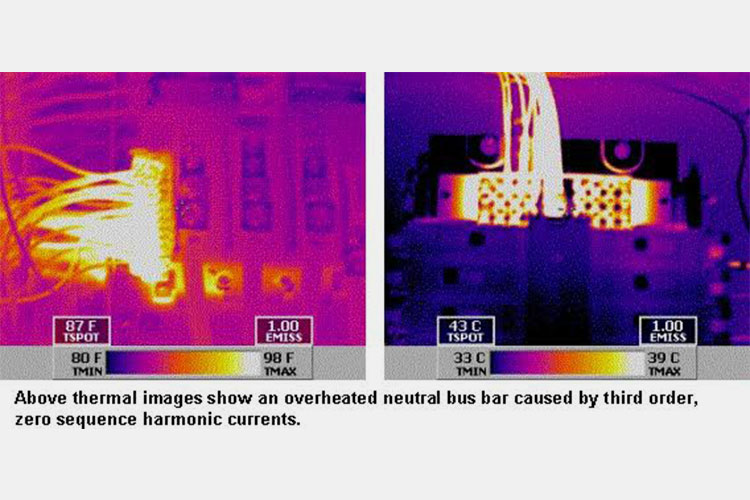
Transformer Overheating
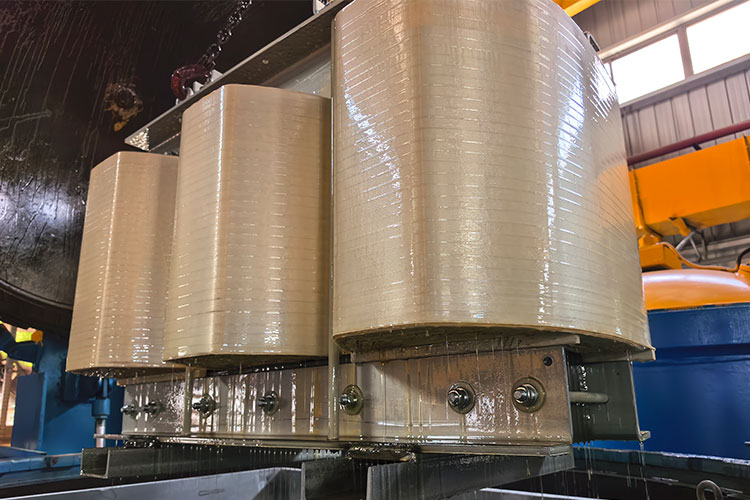
Harmonics drive up core and copper losses, creating intense thermal stress. To combat this, our factory uses advanced VPI (Vacuum Pressure Impregnation) insulation, giving our transformers exceptional structural strength to resist harmonic-induced vibration and heat.
Cable and Conductor Heating
High frequencies push current toward the outer edges of wires (skin effect), shrinking your cable’s capacity and causing dangerous overheating.
Capacitor Bank Failure
Power factor correction capacitors act like magnets for high frequencies, pulling in massive harmonic currents that lead to dielectric breakdown and explosive failures.
Motor Overheating and Vibration
Negative-sequence harmonics (like the 5th and 11th) create counter-rotating magnetic fields, causing severe mechanical vibration, noise, and rapid winding wear.
Neutral Conductor Overloading
Triplen harmonics (3rd and 9th) don’t cancel out in three-phase systems; instead, they add up directly in your neutral wire, risking severe overloads and fire hazards.
Breaker and Relay Nuisance Tripping
Distorted waveforms trick protective devices into misfiring, causing random factory shutdowns or failing to trip during real emergencies.
Power Factor and Efficiency Drops
Harmonics drag down your true power factor, driving up monthly energy penalties and wasting electricity.
Harmonic Resonance
When system inductances and capacitor banks clash, they can trigger dangerous resonance, exponentially multiplying harmonic voltage and current spikes.
Harmonic resonance is one of the most hazardous threats in an industrial plant. It happens when your power factor correction capacitor banks interact with the inductive wiring of your electrical network. Every grid with capacitors has a natural resonant frequency—and if that frequency matches one of your on-site harmonics (like the 5th or 7th), it triggers a severe resonant event.
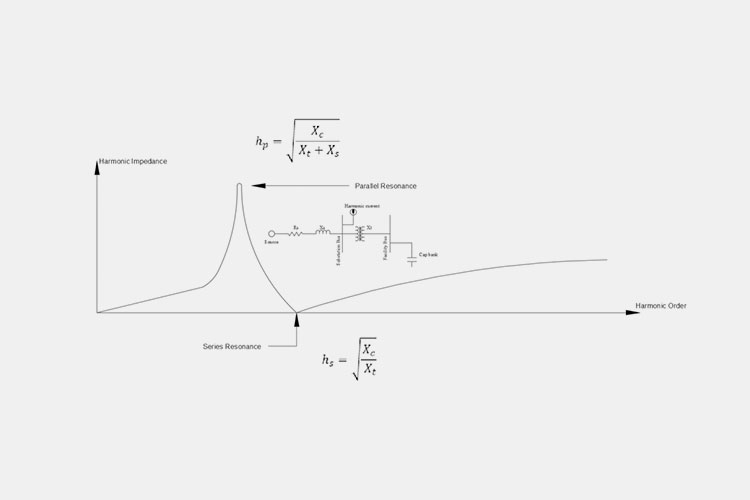
Resonance typically strikes in two forms:
Parallel Resonance: Creates a high-impedance circuit. Even tiny harmonic currents can trigger massive voltage drops, causing extreme voltage distortion and widespread equipment stress.
Series Resonance: Creates a low-impedance path at a specific harmonic frequency, sucking massive currents into the circuit and instantly overloading your components.
When resonance hits, it multiplies harmonic voltage and current spikes exponentially, leading to blown fuses, overheating, and catastrophic capacitor failures. To permanently eliminate this risk, engineers rely on specialized hardware—which brings us to how solutions like a detuned reactor compare with a harmonic filter. If you are considering which to choose, read the detuned reactor vs. harmonic filter guide.
Because harmonics are invisible high-frequency distortions hidden inside your power supply, standard multimeters won’t cut it. Accurate diagnosis requires specialized power quality equipment:
Power Quality and Harmonic Analyzers
Advanced tools that monitor voltage and current waveforms, calculate THDi and THDu, and log electrical events over time.
Digital Oscilloscopes
Give engineers a real-time visual of deformed waveforms, making it easy to spot flattened peaks and irregularities.
Current and Voltage Sensors (CTs/PTs)
Precision transducers that safely step down industrial currents and voltages so your testing tools can read them without distorting the harmonic spectrum.
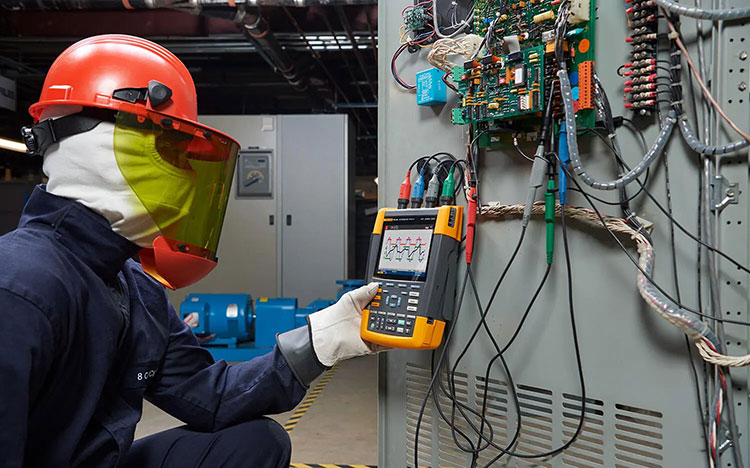
Using these devices, your team can track individual harmonic magnitudes, phase angles, and the complete harmonic spectrum—giving you a precise breakdown of every 3rd, 5th, and 7th frequency impacting your facility.
Fixing harmonic issues in your facility calls for a smart, multi-layered game plan rather than a single band-aid fix. A truly reliable power quality strategy follows a step-by-step path:
Reduce Harmonic-Producing Loads
Tackle the root cause directly by bringing in low-harmonic equipment, modern multi-pulse drives, or upgrading older power supplies.
Improve System Design
Clean up your electrical layout by separating sensitive gear from heavy non-linear equipment and sizing your conductors to handle thermal stress.
Use Line Reactors
Install AC line reactors or DC chokes right at the input of your variable frequency drives (VFDs) to smooth out choppy current pulses.
Use Harmonic Filter Reactors
Pair dedicated filter reactors with your capacitor banks to block unwanted currents and protect your reactive power systems.
Use Passive Harmonic Filters
Set up tuned LC filter circuits in steady, fixed-load areas to easily absorb dominant 5th and 7th frequencies.
Use Active Harmonic Filters (AHFs)
Deploy real-time dynamic filters that track your load currents instantly and inject precise balancing currents to wipe out fluctuating harmonics.
Use Harmonic Mitigating Transformers
Install specialized transformers built with phase-shifting windings to neutralize triplen and common-mode harmonics right at the distribution level.
For a broader framework on tackling plant-wide power quality issues, you can also explore our comprehensive factory harmonics mitigation guide.
Tackling power quality issues isn’t a one-size-fits-all job; it calls for a custom approach built around your specific equipment and unique harmonic challenges. Different grid disturbances simply call for targeted hardware:
Harmonic Problem | Possible Solution |
VFD harmonics | AC line reactor / harmonic filter |
Capacitor resonance | Detuned reactor |
Severe current harmonics | Active harmonic filter |
5th/7th harmonic | Passive harmonic filter |
Neutral/triplen harmonics | Harmonic mitigating transformer |
Industrial harmonic distortion | Customized harmonic mitigation system |
To put these strategies into action, your facility can rely on a powerhouse of specialized hardware:
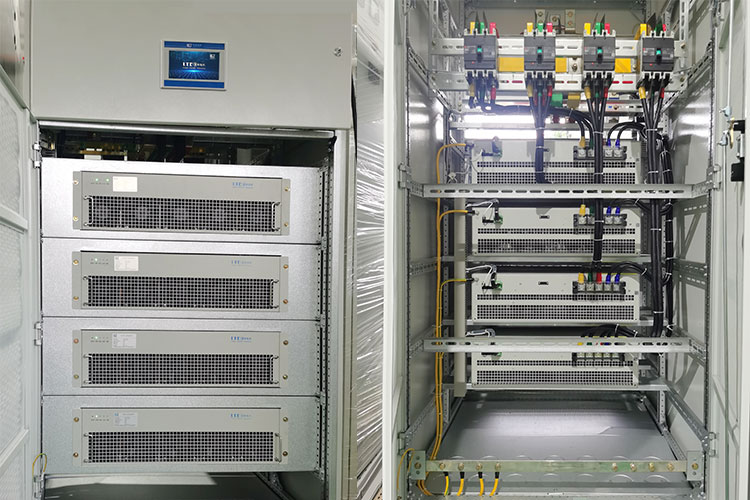
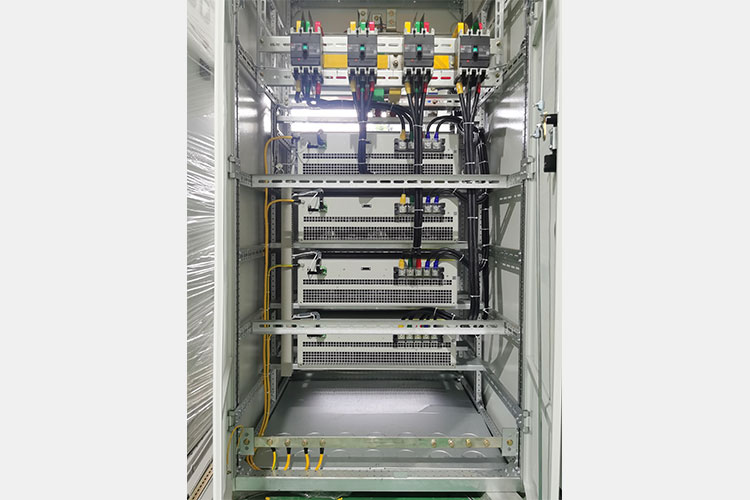
Active Harmonic Filters (AHFs)
Smart, real-time electronic filters that instantly inject balancing currents to wipe out fluctuating harmonic distortion.
Passive Harmonic Filters
Reliable LC circuits tuned to catch and trap specific trouble-makers like the 5th and 7th harmonics.
Harmonic Filter and Detuned Reactors
Essential shields that alter your system’s resonant frequency, keeping your capacitor banks safe from dangerous harmonic spikes.
Harmonic Mitigating Transformers
Heavy-duty transformers built with phase-shifting windings to neutralize triplen harmonics directly at the distribution level.