
• Home
  • >
  • Power Transformers
  • >
  • Transformer Manufacturing: What Is the Difference Between Impregnation and Encapsulation?

Transformer Manufacturing: What Is the Difference Between Impregnation and Encapsulation?


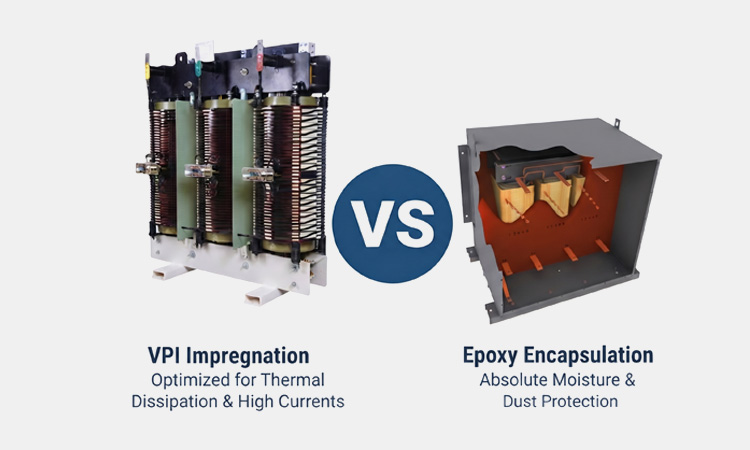
Comparison between LTECPower VPI impregnation transformer and epoxy encapsulation showing thermal efficiency and environmental protection
Comparison of VPI impregnation and epoxy encapsulation

In power distribution and industrial automation, dry-type transformers, distribution transformers, and electric reactors are widely used. However, to maintain the operational lifespan and safety, except for robust enclosures and copper or aluminum windings, the insulation system is important. 

With a poor insulation system, in a harsh environment, the heat and heavy power may destroy the insulation and lead to microscopic air gaps, partial discharge, dielectric breakdown, and catastrophic failure.

To prevent this, there are two primary processing methods that dominate the industry: Vacuum Pressure Impregnation (VPI) and Encapsulation (VPE / Epoxy Encapsulation).

This guide breaks down the differences between transformer impregnation vs encapsulation. Let’s explore now.
1. Why Transformer Insulation Systems Matter?

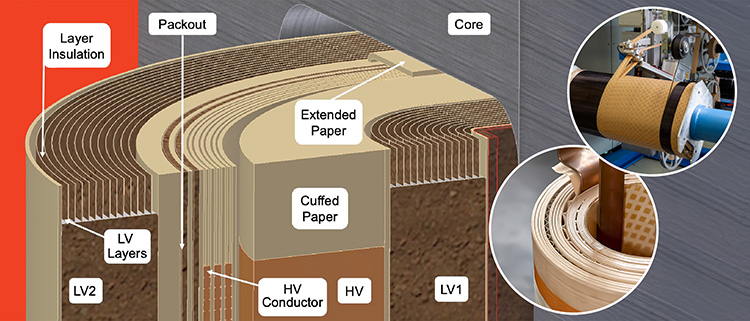
Detailed structural cross-section of dry-type transformer windings showing layer insulation and conductor arrangement
Transformer coils with layer insulation and internal structures-sourced: weidmann

Before learning about the two methods, you need to know about air pockets and moisture, the enemies of your transformer insulation system. 

During copper or aluminum winding, there are tiny air bubbles trapped inside. When high voltages pass through, the air bubbles will get stressed, then cause a partial discharge (dielectric breakdown). After a long time, the partial discharge in transformers will eat away at the insulation and cause your equipment to break down. 

To help avoid this for iron-core reactors and dry-type transformers ranging from 1.2 kV to 35 kV, you can utilize the high-grade thermal insulation system, including Class H (180℃) or Class R (220℃). They are strictly compliant with international standards such as IEC 60076-11, IEEE 519, and UL 1446.

2. Deep Dive into Vacuum Pressure Impregnation (VPI)

When come to high-performance transformers and reactors, Vacuum Pressure Impregnation (VPI) is widely recognized and acknowledged. 
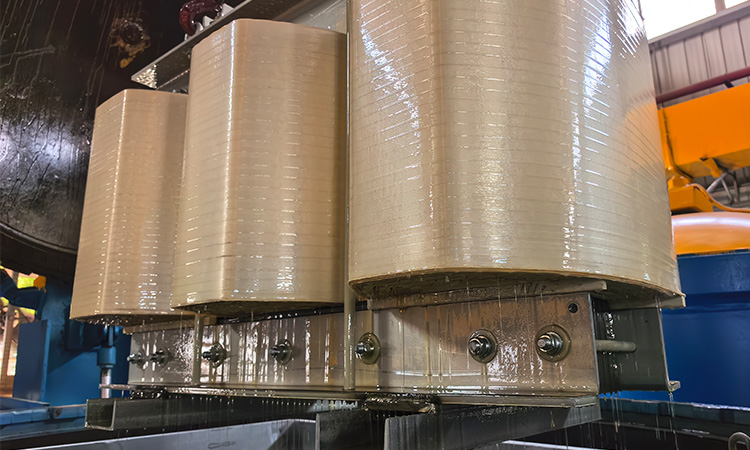
VPI vacuum pressure impregnation process for transformer coils
LTECPower factory production of VPI coils ensuring superior thermal dissipation.

How the VPI Process Works:

Evacuation (Vacuum Stage): Place the wired coils inside a sealed chamber. Through a deep vacuum, all trapped air, moisture, and gases will be sucked out of the windings.

Resin Flooding: Add the liquid resin (a special glue-like liquid) into the chamber until the coils are fully covered. 

Pressure Pressurization: Through vacuuming, the high-pressure forces the resin deep inside every tiny hole and crack of the coils.

Thermal Curing: After being impregnated, remove the coil and bake it in the curing oven until the liquid resin turns into a solid, highly resilient molecular network.

Key Advantages of VPI:

Superior Thermal Dissipation: By applying a thin layer of resin instead of a thick block, the internal heat escapes rapidly into the surrounding air. It is the ultimate choice for heavy-current, high-capacity equipment, such as MV dry-type transformers and current-limiting reactors.

Structural Stability & Cost-Effectiveness: Holding wires tightly together, electromagnetic forces even during short circuits, the VPI ensures transformers and reactors are highly cost-effective for large-scale industrial manufacturing.

3. Understanding Encapsulation (VPE / Epoxy Encapsulated): Ultimate Environmental Defense

While VPI focuses on deep impregnation to maintain maximum thermal conductivity, encapsulation (VPE or epoxy encapsulation) does something different. 
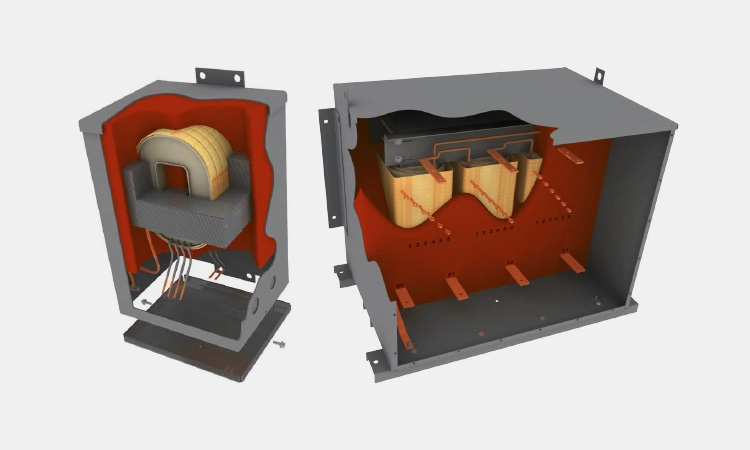
Epoxy encapsulated transformer module showing solid resin protection
Cross-section of epoxy encapsulated units-sourced: beaverelectrical

How encapsulation works:

Instead of filling holes, encapsulation seals the entire coil with a thick, solid block of plastic or epoxy resin.

Key Advantages of Encapsulation:

Absolute Environmental Protection: Completely stopping water, moisture, dust, and chemicals from damaging transformers and reactors inside, the encapsulation withstands operating environments up to 95% relative humidity.

Extreme Mechanical Durability: With solid plastic or epoxy resin, it provides unmatched resistance against severe mechanical vibrations and physical shocks.

Target Workloads: Perfect for harsh outdoor environments, such as marine, mining, and heavy industry, and the oil and gas sectors, the encapsulation can protect your equipment from degradation or breakage. 

4. What Are the Differences Between Cast Resin And Encapsulation?

Cast resin and encapsulation both use solid epoxy resins to protect electrical components, but they are different in purpose and voltage levels.
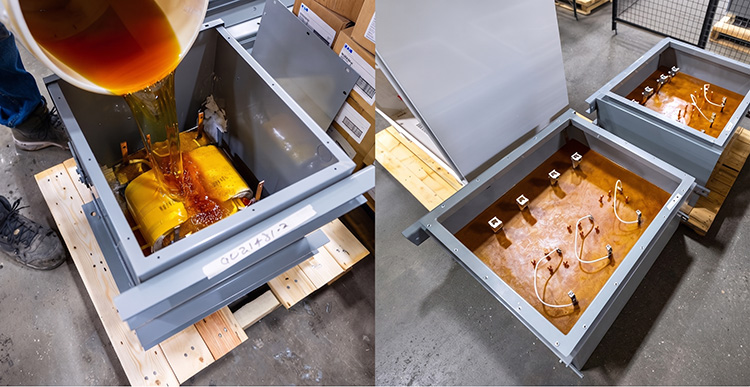
Epoxy resin encapsulation and potting process for electrical modules
Encapsulation process utilizing high-viscosity epoxy resin-sourced: maddox

Purpose

Cast Resin: Mostly used for medium-voltage (MV) coil manufacturing (such as 10 kV to 35 kV power transformers) in the power grid.

Encapsulation: More suitable for lower-voltage modules. 

Manufacturing Process

Cast Resin: Putting high-voltage coils inside precision molds and turning the vacuum-cast into a solid, fiberglass-reinforced epoxy cylinder.

Encapsulation: The entire windings are completely encapsulated within a thick, solid block of polymer or high-viscosity resin.

5. Head-to-Head Comparison: Impregnation (VPI) vs. Encapsulation

To help you select the optimal manufacturing process for your projects, explore the following breakdown:


Vacuum Pressure Impregnation (VPI)

Encapsulation (VPE / Epoxy)

Thermal Management

Excellent (Thin film allows fast heat dissipation)

Moderate (Thicker resin acts as a thermal barrier)

Moisture & Dust Resistance

Good (Requires appropriate enclosure IP rating)

Maximum (Hermetically sealed solid barrier)

Mechanical Shock Resistance

High (Withstands normal industrial vibrations)

Extreme (Superior resistance to severe shock/vibe)

Voltage & Capacity Range

Scalable from Low Voltage up to 35 kV / 2500 kVA

Typically optimized for low-to-medium compact modules

Manufacturing Cost & Weight

Cost-effective, lighter overall unit weight

Higher resin volume, heavier weight

Conclusion:

Choosing between VPI (impregnation) and encapsulation mainly depends on whether you need the best cooling for heavy, continuous power, or do you need absolute protection against water and dust. 

If your system needs high current capacities, superior thermal efficiency, and reliable indoor or climate-controlled industrial operation, then the VPI-processed transformers and reactors are your best choice.

Choose encapsulated units if your system and equipment need to endure punishing outdoor conditions, corrosive atmospheres, or severe physical vibrations.

Are you looking for high-reliability, custom-engineered power quality solutions built on advanced VPI insulation processes? Explore our comprehensive lineup of LV/MV Dry-Type Transformers and Iron-Core Reactors, or contact our engineering teams now for a tailored design. 

FAQs 

What is the main difference between transformer impregnation (VPI) and encapsulation?

Vacuum Pressure Impregnation (VPI) uses resin to penetrate internal air gaps under vacuum and pressure for maximized thermal dissipation. 

Encapsulation (VPE) builds windings within a thick, solid block of high-viscosity resin to provide absolute environmental sealing against moisture, dust, and severe physical shocks.

High-capacity dry-type transformers and iron-core reactors (up to 2500 kVA and beyond) are prone to generating heat. With a thin, uniform resin film rather than a thick thermal barrier built by VPI, the heat will be eliminated, ensuring superior thermal efficiency.

If your system is operated in punishing, high-contamination environments—such as harsh outdoor conditions, marine installations, mining sites, or locations with up to 95% relative humidity and corrosive chemicals- then the encapsulated transformer is recommended.

No, not at all. 

While both of them use solid epoxy resins. The cast resin is specialized for medium-voltage (MV) coil manufacturing (10 kV to 35 kV). In cast resin, the coils are placed inside molds and cast under vacuum until they turn into a strong, fiberglass cylinder.

Encapsulation is usually applied for lower-voltage coils, and their windings are sealed within a thick, solid block of polymer.

Before selecting an insulation system, you can evaluate the thermal efficiency, environmental resilience, and load capacity.

Keep Learning

Leave a Reply

Your email address will not be published. Required fields are marked *