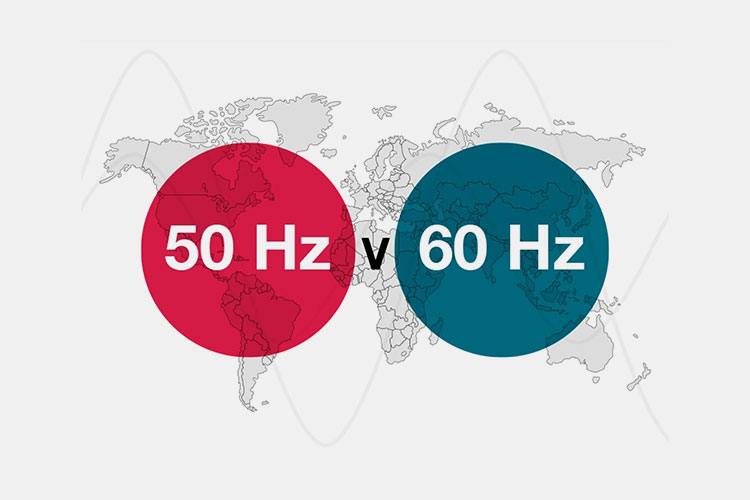
If you are sourcing equipment overseas, there is one thing you may easily forget, and that may cause you headaches: differences in power grid frequency. Especially when you buy a motor or transformer that looks and runs great at your plant, it may overheat or run at the wrong speed if you run it at the wrong grid frequency (the clash between 50 Hz and 60 Hz).
This guide is here to help you with the confusion. By breaking down the physics and history behind 50 Hz and 60 Hz, you can get practical, step-by-step advice to avoid cross-border compatibility traps.
Alternating current (AC) is like a wave that constantly swings back and forth. Frequency simply counts how many times that wave completes a full swing every single second. And they are measured in Hertz (Hz).
50 Hz vs 60 Hz
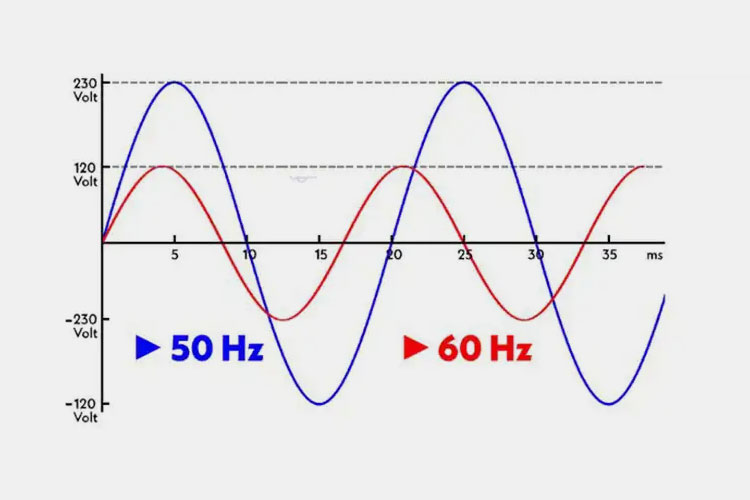
The 50 Hz system wave completes 50 full cycles per second. It means that currents in a 50 Hz system complete each cycle in 20 milliseconds.
Compared with 50 Hz, a 60 Hz system wave moves a bit faster. It completes 60 cycles per second. So each cycle only takes 16.6 milliseconds.
Why does this tiny fraction of a second matter?
Because even a second matter may influence the electricity to constantly flip back and forth between positive and negative. Currents in a 60 Hz system flip faster than in a 50 Hz system. This difference changes how magnetic fields build up and collapse inside transformers and motors. So understanding this difference is the secret to unlocking why your transformer and motor are on different sides of the globe!
Where in the World Do 50 Hz and 60 Hz Live?
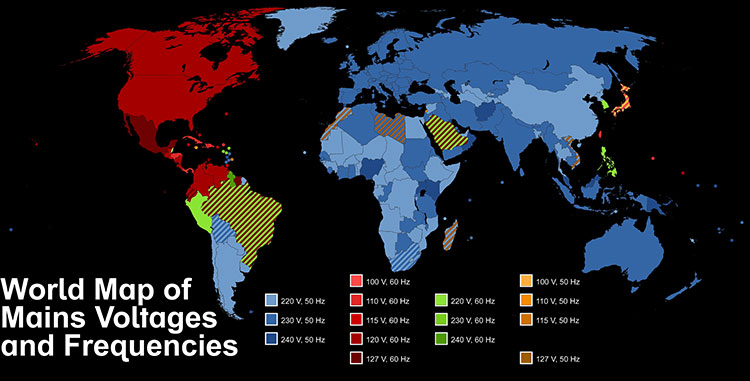
In global electricity, there is a massive divide. Most of the countries in the world, they run on 50 Hz, such as Europe, the UK, Asia, Africa, and Australia. Meanwhile, North America (the US and Canada) uses the 60 Hz system. So you need to figure out where you are and what kind of frequency you are running now, making sure your machines can actually plug in and work safely abroad.
A Fascinating Quirky Marvel: Japan’s Frequency Split
Japan is different. If you travel across the country, you cross an invisible electric border! Japan accepts both 50 Hz and 60 Hz. Eastern Japan (including Tokyo) runs on 50 Hz, while Western Japan (including Osaka) runs on 60 Hz.
But why? Back in the 19th century, Japan imported both German generators (50 Hz) and American ones. So the two places in Japan speak different electrical “languages.” To solve the differences, they built massive high-tech converter stations that seamlessly translate electricity from 50 Hz to 60 Hz (and vice versa).
The “Wild West” Days of Early Electricity
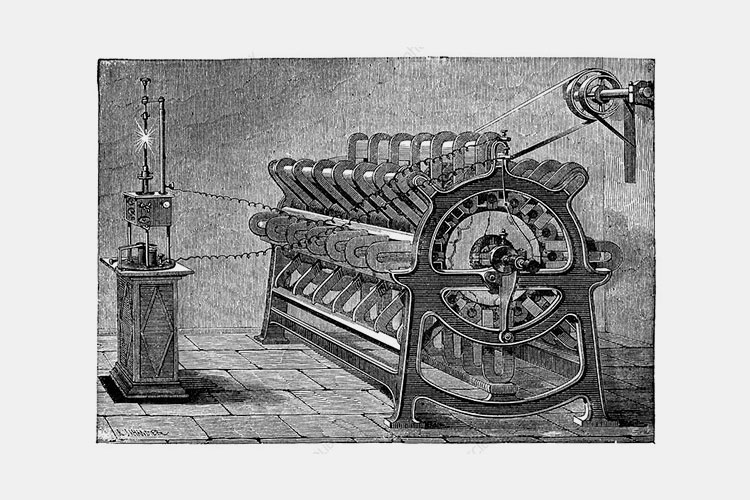
Back in the 1880s and 1890s, there was no standard rulebook, so the world was fighting for electricity frequency.
Early power systems were completely decentralized. So engineers only picked the frequency that fit their own steam engines or water turbines. So it totally ranged wildly from 16 Hz all the way up to 133 Hz. For example, Coventry in England ran on an 87 Hz system for decades.
How Europe Chose 50 Hz (The AEG Story)
In Europe, the German company named AEG stepped up and brought it into order. They noticed that electric lights visibly flicker at 40 Hz. So AEG made 50 Hz a standard and widely applied in the massive industrial power across the entire continent.
How North America Chose 60 Hz (Westinghouse)
Across the Atlantic, Nikola Tesla and Westinghouse Electric made 60 Hz the standard. By 1890, Westinghouse found out that 60 Hz hit the perfect balance. 60 Hz not only keeps lights steady but also keeps motors running efficiently. Even though General Electric initially tried a 50 Hz approach in California, the market finally chose to side with Westinghouse and made North America’s path to 60 Hz.
The Long Road to Clean-Up
Getting the world onto these two standards didn’t happen overnight. It took a long time. Even as late as 1918, London was persisting in 10 different frequencies!
How Do 50 Hz and 60 Hz Change Your Machines?
When came across 50 Hz and 60 Hz, electrical equipment behaves differently. The physical behavior of the machine shifts completely. Here is how:
Motor Speed: Why Things Run Slower at 50 Hz
A standard motor running on a 60 Hz network spins at around 3,600 RPM; however, it drops to 3,000 RPM on a 50 Hz grid, a sharp 20% loss in speed. For pumps, fans, and industrial production lines, the speed drop severely alters flow rates, pressure, and overall output.
Transformer Size: Why 50 Hz Needs More Iron
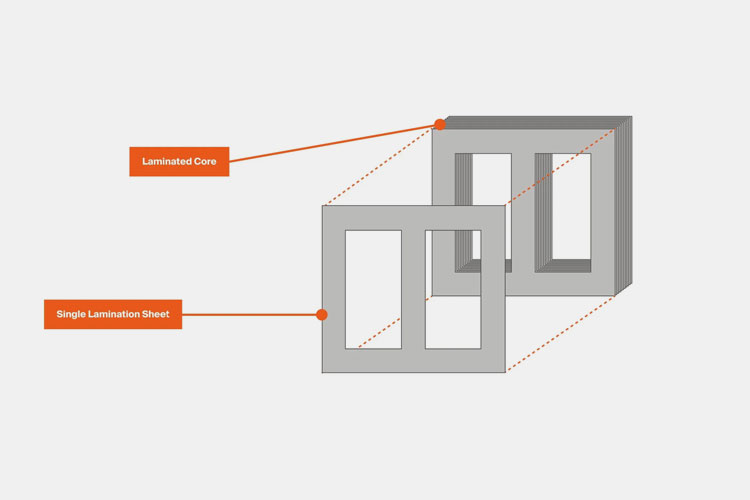
Generally, lower frequencies demand a stronger magnetic field to do the same work. Because 50 Hz has a slower cycle than 60 Hz, transformers and reactors run at 50 Hz need to be built with significantly larger, heavier iron cores with more electrical steel. Otherwise, the core will choke and overheat from magnetic saturation. So that’s why 60 Hz electric equipment is often built lighter and more compactly.
Reactance: The Invisible Resistance Shift
Inductive resistance increases as frequency increases. So if you use the same coil, the resistance against current is roughly 20% higher in a 60 Hz system than in a 50 Hz system. This subtle change changes how voltage drops over long cables and how your harmonic filters and VFD output reactors perform.
What Happens When Frequencies Don’t Match?
If you apply the machinery across the globe without checking the grid frequency, it will bring you disaster. Below is why.
Running 60 Hz Equipment on a 50 Hz Grid (High Danger!)
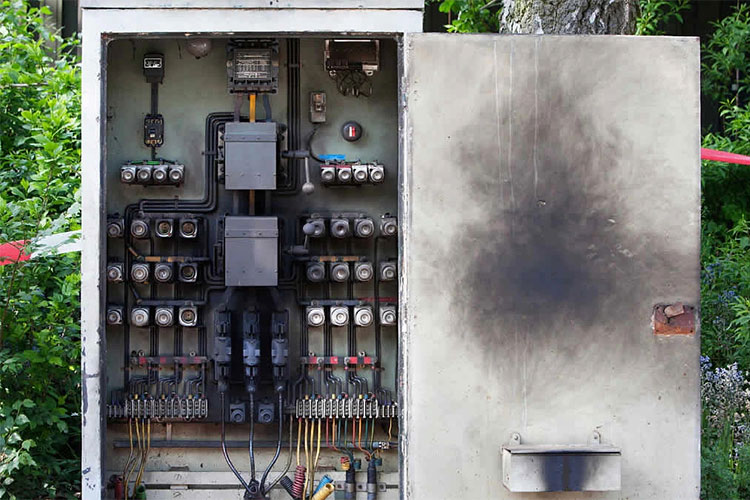
To run 60 Hz equipment on a 50 Hz grid is totally a mistake. If your transformer is built for 60 Hz into a 50 Hz socket at the same voltage, then the iron core will be forced to operate at a lower frequency. It may lead to about 20% more magnetic stress. In the end, there will be severe overheating, melting insulation, and potential catastrophic failure.
Running 50 Hz Equipment on a 60 Hz Grid (Safer, But Watch Out)
Conversely, it is much safer to run a 50 Hz machine on a 60 Hz grid. Because the core stays well away from magnetic saturation. However, never do that. Though it will not cause severe failure, your connected motors will spin 20% faster, leading to higher friction and more windage noise. There will be extra energy losses from iron heating.
The Ultimate Fix: How Variable Frequency Drives (VFDs) Save the Day
Thankfully, there is a key technology to solve this problem: Variable Frequency Drives (VFDs). As an electrical universal translator, VFDs can convert your raw power into DC and then rebuild a custom, independent frequency and voltage for your motor.
Breaking Grid Chains with Power Electronics
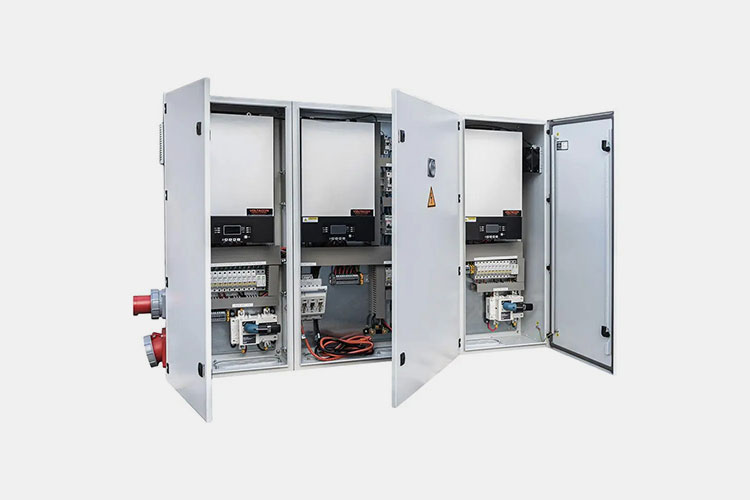
It brings a massive headache for equipment manufacturers to build machinery for the global market due to the different frequencies. If you want to sell your transformers and reactors in both 50 Hz and 60 Hz countries, then you need two different electrical setups. But today, Variable Frequency Drives (VFDs) can solve your problem.
How the “Frequency Magic” Works
As an ingenious middleman, the modern VFD can convert your local raw power into smooth DC power. Read more about how components like a VFD AC line reactor vs DC choke interact with these systems. Using lightning-fast digital switching tech, it completely remakes it into a brand-new, custom frequency for the motor. So you no longer have to worry about custom-building different versions of a machine for different countries.