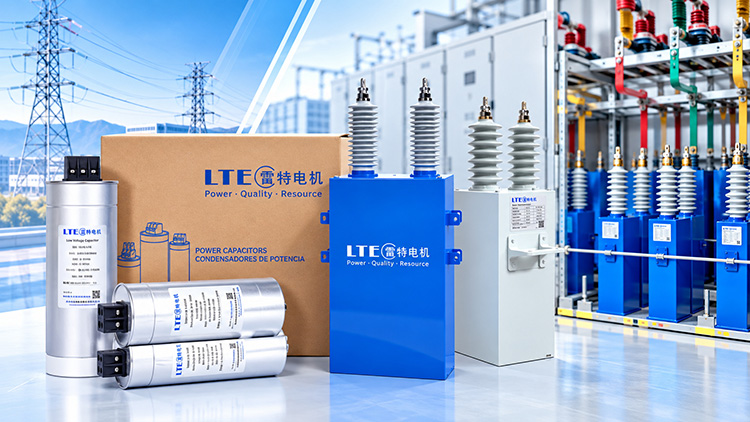
Power Factor Correction: Methods, Capacitor Sizing & Industrial Applications
Understand power factor correction in industrial electrical systems, including capacitor bank sizing, PFC methods, reactive power compensation, harmonic risks, and…

Find expert answers to common questions regarding our industrial dry-type transformers, reactors, capacitors, harmonic filters and custom engineering services, and global delivery standards.
It limits inrush current, reduces harmonic distortion (THDi), and protects the variable frequency drive (VFD) from transient grid overvoltages and spikes.
Use an Output Reactor for standard motor lead lengths up to 30–50 meters. For distances exceeding 100 meters, a Sine Wave Filter is required to smooth the PWM waveform into a pure sine wave and protect motor windings.
Iron-core reactors deliver higher inductance within a much more compact footprint, making them the ideal choice for indoor switchgear and cabinet integration.
Our medium-voltage reactors (up to 38 kV) utilize advanced Vacuum Pressure Impregnation (VPI) technology, ensuring superior mechanical strength and insulation reliability under the fluctuating loads of solar and wind farms.
It shifts the resonant frequency of the capacitor bank below the lowest dominant harmonic order (typically the 5th), effectively preventing dangerous harmonic resonance.
Yes. We deliver fully customized impedance ratings tailored to your exact grid parameters and harmonic mitigation targets.
We design and manufacture high-performance Air-core Reactors for systems operating up to 115 kV, tailored for high-voltage substation applications.
Yes. All our standard and custom-engineered reactors are built for high-efficiency operation across both 50Hz and 60Hz networks.
They limit fault currents during single-phase-to-ground events, shielding critical generators and transformers from severe thermal and mechanical stress.
We supply Class H (180°C) as our standard specification, with optional Class R (220°C) insulation systems available for extreme temperature environments.
It is a specialized transformer engineered for 12, 18, or 24-pulse VFD systems to effectively cancel out low-order harmonics at the source.
Dry-type transformers are non-flammable, require zero oil maintenance, and offer enhanced safety for indoor, underground, or high-rise building installations.
It establishes an artificial neutral point for ungrounded 3-phase systems, enabling proper system grounding and fast fault detection.
Yes. Our HMTs are specifically designed to handle severe non-linear loads and cancel out zero-sequence harmonics in neutral conductors.
We manufacture dry-type power transformers with capacities up to 10 MVA and voltage ratings up to 35 kV.
We utilize optimized cooling air duct designs and optional forced-air cooling (fan systems) integrated with Pt100 temperature sensors.
Yes. We provide specialized anti-corrosion treatments and VPI (Vacuum Pressure Impregnation) technology to withstand high humidity and salt-spray conditions.
While Dyn11 is standard, we can fully customize vector groups (such as Ynd11 or Yd1) to match your exact project specifications.
Yes. Our isolation transformers provide clean, electrostatically decoupled power, significantly reducing leakage current and electromagnetic interference (EMI).
Yes. We specialize in advanced VPI dry-type technology, ensuring exceptional mechanical strength, thermal endurance, and environmental protection.
Passive filters utilize fixed L-C circuits to target specific harmonic frequencies, whereas Active Harmonic Filters (AHF) dynamically inject compensatory current in real-time to cancel all targeted harmonics.
Yes. Our AHF modules are engineered to meet strict IEEE 519 standards, typically reducing total harmonic distortion (THDi) from over 30% to below 5%.
An SVG is an advanced power electronics device that provides instantaneous, stepless reactive power compensation for both leading and lagging power factor correction.
It eliminates high $dV/dt$ (rate of voltage rise) voltage spikes originating from VFD outputs, preventing premature insulation breakdown and extending motor lifespan.
Yes. Our modular design allows for seamless parallel expansion, enabling you to increase total compensation capacity as your facility grows.
Yes. By optimizing the Power Factor (PF) and eliminating harmonic losses, they significantly lower energy consumption and prevent utility power-factor penalties.
Absolutely. With a rapid response time of less than 1 ms, our AHF is ideal for fast-fluctuating, severe non-linear loads.
It is a specialized filtering device designed to reduce peak voltage and the rate of voltage change at motor terminals, making it ideal for medium-length cable runs.
Our units feature a 7-inch intuitive HMI touchscreen and support standard communication protocols (such as Modbus RTU/TCP) for effortless SCADA integration.
Yes. We offer professional simulation-backed data analysis to help you configure the most cost-effective and precise filtering solution for your plant.
A PFC capacitor is a critical device used to supply reactive power (kVAR) to an electrical grid, improving the Power Factor (PF) and reducing the overall load on transformers and distribution infrastructure.
Self-healing capacitors utilize advanced metallized film technology that can automatically clear and isolate minor internal dielectric punctures, ensuring a significantly longer operational lifespan and enhanced safety.
Single-phase units are typically deployed for specialized single-phase loads or unbalanced network corrections, whereas three-phase units serve as the standard choice for industrial power distribution and centralized capacitor banks.
Calculating the required kVAR involves analyzing your current Power Factor, your target Power Factor (typically 0.95 or higher), and the total active power load (kW) of your facility.
Dry-type capacitors utilize eco-friendly resin or gas insulation, making them completely leak-proof and maintenance-free, whereas traditional oil-filled units carry inherent risks of fluid leakage.
In environments with severe harmonic pollution (originating from VFDs or industrial lighting), detuned reactors prevent the capacitor bank from forming a dangerous parallel resonance circuit that could lead to equipment failure or thermal damage.
The detuning factor represents the ratio of reactor reactance to capacitor reactance. A 7% factor is standard for suppressing 5th and higher harmonics, while a 14% factor is implemented for 3rd harmonic mitigation.
Yes, this is known as “Fixed Compensation.” However, proper engineering precautions must be taken to prevent self-excitation phenomena when the motor is switched off.
Capacitors are exceptionally sensitive to operating voltage. Even a sustained 10% overvoltage can reduce a capacitor’s designed lifespan by more than 50%.
It delivers precise kVAR compensation to optimize the power factor while simultaneously safeguarding the electrical network from harmonic amplification and resonance issues.
It is a vital safety mechanism designed to automatically disconnect the capacitor from the circuit if internal pressure builds up due to a fault, effectively preventing the casing from rupturing.
We recommend conducting a thorough visual inspection every 6 months and performing a capacitance measurement annually to detect and replace any units experiencing capacity loss.
It ensures that the residual voltage across the capacitor terminals drops to a safe level (typically below 50 V) within a few minutes after disconnection, protecting maintenance personnel from electric shocks.
Yes. High ambient temperatures accelerate the thermal aging of the dielectric film. Our high-reliability capacitors are engineered to operate reliably within a temperature range of -25°C to +55°C.
Key indicators include physical casing bulging, frequent fuse blowing, abnormal humming noises, and a noticeable decline in the system’s corrected Power Factor.
Yes. Many of our core products carry the UL certification (File No. E487892 for electrical insulation systems), ensuring full compliance with North American safety benchmarks.
It is a rigorous validation by TÜV Rheinland certifying that our manufacturing and product safety standards meet top global compliance requirements.
Yes. All our power quality solutions (such as Active and Passive Harmonic Filters) are engineered to help your facility meet or exceed strict IEEE 519 harmonic distortion limits.
Yes. We are dual-certified under ISO 9001:2015 for Quality Management Systems and ISO 14001:2015 for Environmental Management Systems.
It is an official governmental recognition honoring LTECPower as a high-growth, high-innovation technology champion within the electrical manufacturing sector.
Yes. We hold full customs union product safety approvals, including EAC certifications complying with IEC standards.
Our advanced manufacturing facility is located at No. 86 Mei Gui Ri, Kunshan Development Zone, Jiangsu Province, China, with a global operational footprint spanning over 20 years.
Established in 2004, we bring over two decades of specialized engineering expertise in power quality products, reactors, and dry-type transformers.
Yes. We feature advanced in-house testing centers, including specialized partial discharge testing rooms and high-voltage laboratories to ensure uncompromising technical rigor.
Yes. We can provide comprehensive Type Test reports and compliance documentation from accredited international laboratories upon request.
Oil & Gas, Mining, Water Treatment, Steel Mills, and any industry using large-scale VFD motor drives.
Our step-up transformers and harmonic filters ensure that solar energy is cleanly and efficiently integrated into the utility grid.
Yes, by installing line reactors, we reduce electrical noise that often causes sensors and controllers in HVAC systems to malfunction.
Yes, our low-noise dry-type transformers and SVG units ensure 24/7 power stability for sensitive server environments.
3% is standard for general protection; 5% is recommended for sites with high harmonic distortion or when you need to meet stricter IEEE 519 limits.
Typically 4-6 weeks, depending on the complexity of the design and raw material requirements.
Yes, we provide tailored manufacturing services for many global electrical giants under their own brands.
With proper maintenance and within rated conditions, our reactors are designed for a service life of 20+ years.
We use high-grade magnetic steel with low loss and design the windings with specific current density margins to handle harmonic heating.
Yes, our reactors and filters are universal and work seamlessly with all major global VFD manufacturers.
Standard designs are for up to 1000m. For higher altitudes (e.g., 3000m), we apply a derating factor to the insulation and cooling.
Yes, we can provide enclosures ranging from IP00 (open) to IP20, IP54, or even IP65 for outdoor use.
We use high-purity electrolytic copper or high-grade aluminum foil, depending on the client’s efficiency and budget requirements.
We perform Lightning Impulse Tests and Power Frequency Withstand Voltage Tests according to IEC 60076 standards.
Minimal. Regular inspection for dust accumulation and checking the tightness of electrical connections is usually sufficient.
Rated voltage, rated current (or kVA), frequency, required impedance (%), and environment (indoor/outdoor).
Yes, this is one of our core products for reducing harmonics in high-power industrial drives.
We use advanced core stacking and gluing techniques to minimize vibration and keep noise levels well within industry standards.
Yes, we use eco-friendly materials that comply with the RoHS directive for hazardous substances.
You can reach our engineering team via the “Contact Us” form on ltecpower.com or call our 24/7 service hotline.
We maintain a strategic inventory of core materials (silicon steel and copper) and utilize high-speed vertical winding technology, allowing us to deliver custom solutions 30% faster than the industry average.
Yes, we provide “Fast-Track” production for critical infrastructure repairs, prioritizing engineering and shipping to minimize client downtime.
Absolutely. We provide detailed 3D models within 48 hours of design confirmation to help your engineers accelerate the cabinet layout process.
We use export-standard vacuum packaging and reinforced ISPM-15 fumigated wooden crates with shock-absorbent cushioning to prevent moisture and vibration damage.
We apply a thermal derating design and use Class R (220°C) insulation materials, ensuring stable performance even in unventilated outdoor enclosures in high-heat zones.
Yes, our structural designs are validated to meet Zone 4 seismic requirements, featuring reinforced base channels and vibration-damping supports.
Through vacuum pressure impregnation (VPI) and core-clamping technology, we keep noise levels below 65dB, significantly quieter than standard industrial units.
Every MV unit undergoes Partial Discharge (PD) testing in our lab, ensuring levels below 10pC, which drastically extends the insulation life.
A 12-pulse configuration creates a 30° phase shift that naturally cancels the 5th and 7th harmonics, reducing THDi by up to 80% without additional filters.
Yes, adding individual reactors to each drive prevents cross-talk and protects the sensitive DC bus of each VFD from mutual interference.
Our reactors are designed with a high linearity (typically 150-200% of rated current), ensuring the inductance doesn’t drop sharply during transient overcurrent events.
Yes, we offer K-4, K-13, and K-20 rated transformers designed to handle the additional heat generated by harmonic currents in data centers and hospitals.
Electrolyzers require high-current DC rectification. Our transformers and smoothing reactors are built to handle the continuous high-duty cycles of green hydrogen production.
Yes, our high-frequency magnetic materials are optimized for the latest wide-bandgap semiconductors used in ultra-fast EV charging stations.
Yes, our isolation transformers are designed for bi-directional energy transfer, maintaining high efficiency during both charging and discharging cycles.
For space-constrained sites or projects requiring maximum efficiency (lower heat loss), Copper pays for itself through energy savings and reduced cooling costs over 5-10 years.
Yes, we offer “Drop-in Replacement” services where we match the electrical specs and physical mounting dimensions of your existing brand.
We provide technical data sheets, compliance certificates, and budget pricing within 24 hours to help you complete your tender documents on time.
We provide remote commissioning support via video link or can dispatch field engineers to major global hubs through our partner network.
Yes, we offer “Long-term Maintenance Kits” including cooling fans, sensors, and fuses to ensure continuous operation for critical facilities.
Lorem ipsum dolor sit amet, consectetur adipiscing elit. Suspendisse condimentum ante nulla, quis varius arcu feugiat efficitur. Maecenas sed augue vel magna rutrum malesuada.
Understand power factor correction in industrial electrical systems, including capacitor bank sizing, PFC methods, reactive power compensation, harmonic risks, and…
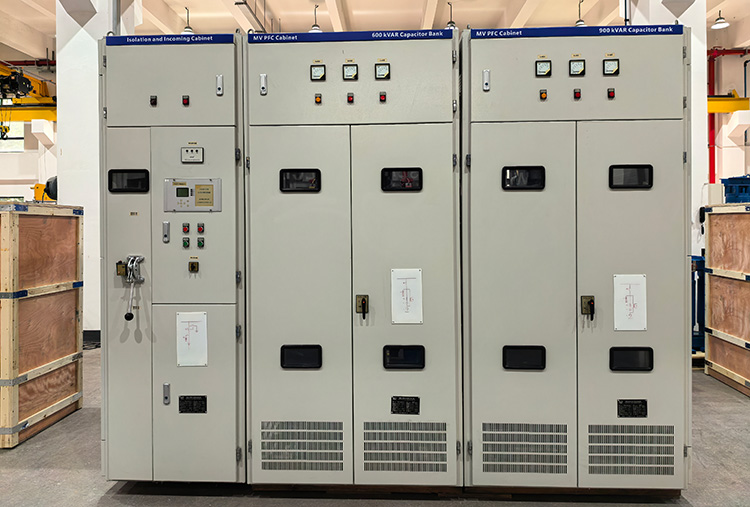
What is a shunt capacitor? Learn how shunt capacitors work, improve power factor, and support voltage in electrical distribution systems.…
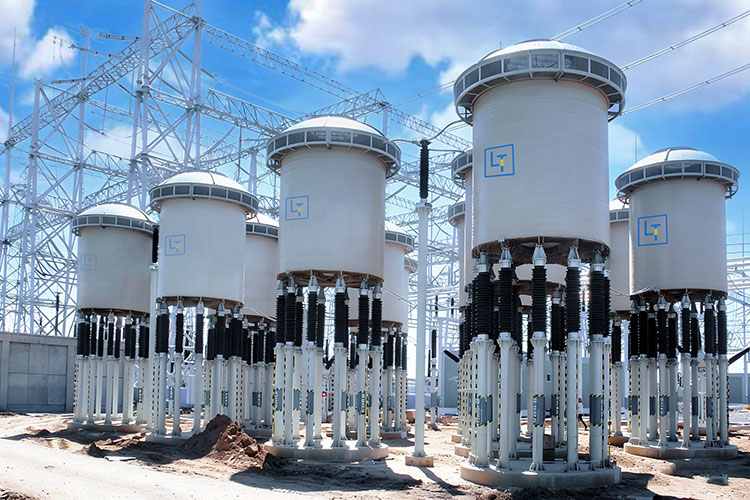
What is a current limiting reactor, and when do you need one? Learn how it reduces short-circuit current, where it…

From customized reactor design to long-term grid stability. Let our experts optimize your power quality today.
Your reliable engineering partner, delivering advanced power quality and grid stability for global industries.