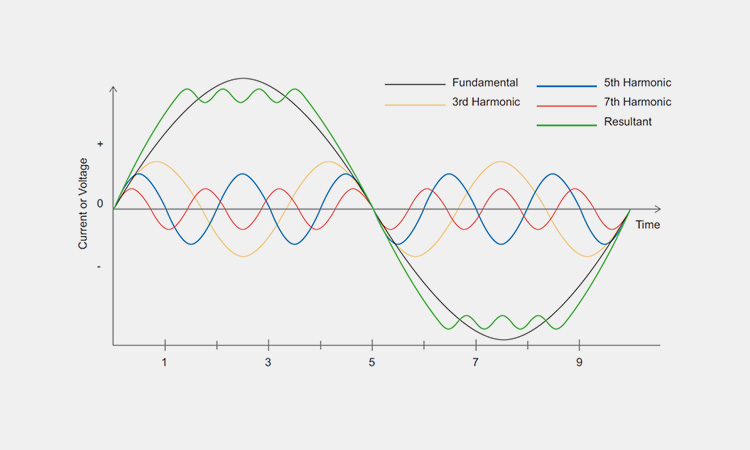
Figure 1: Harmonic superposition waveform distortion.
During operation, VFDs convert AC power to DC with a diode bridge rectifier. By drawing current in sharp, short pulses rather than a smooth sinusoidal wave, the rectifier may create current harmonics in your power grid.
If left untreated, the harmonics may cause power losses, overheating in transformers, nuisance breaker tripping, and destroy your capacitors.
So you need a reactor to slow down the rate of change of current (di/dt). By adding the needed impedance, the inductive reactors can smooth current waveforms and help protect the sensitive components.
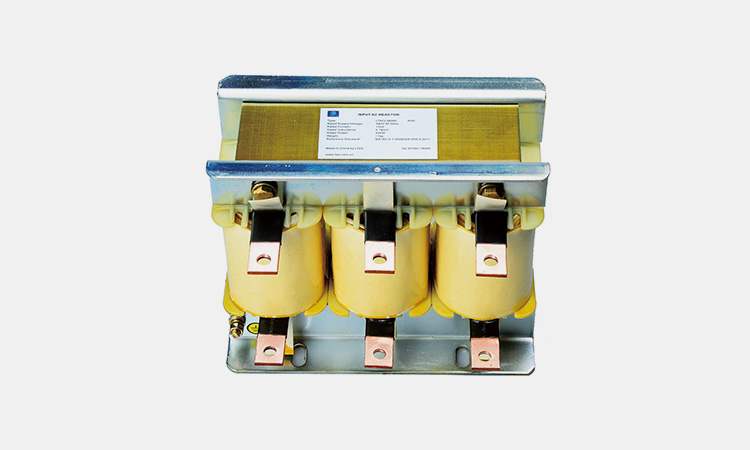
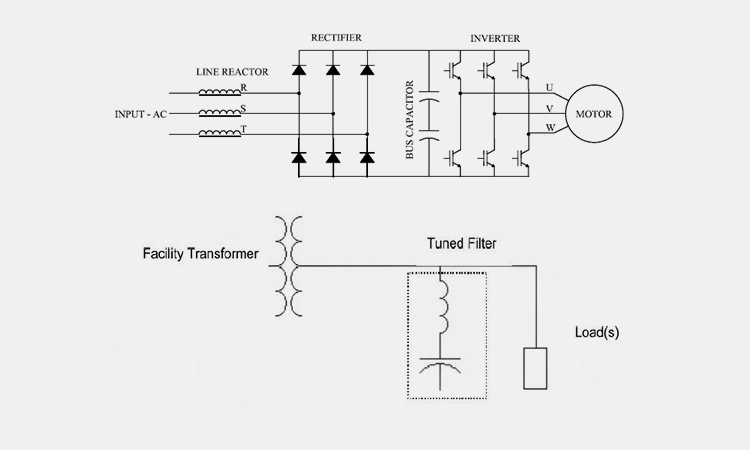
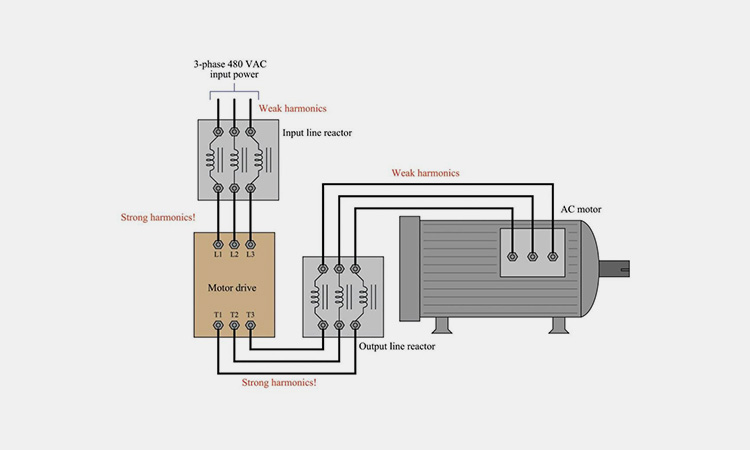
Connected in series between the main power supply and the VFD input terminals, an AC line reactor is a three-phase inductor.
How does an AC line reactor work?
By absorbing high-frequency transient voltage spikes, the AC line reactor limits surge currents and provides basic harmonic attenuation. Acting as an inductive buffer, it can only handle standard impedance ratings of 2%, 3%, or 5%.
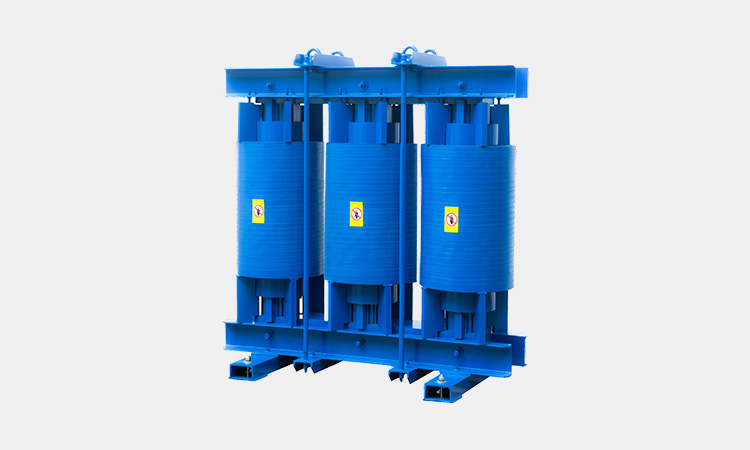
Also called a detuned filter reactor, the filter reactor is engineered to connect in series with Power Factor Correction (PFC) capacitors.
How does a filter reactor work?
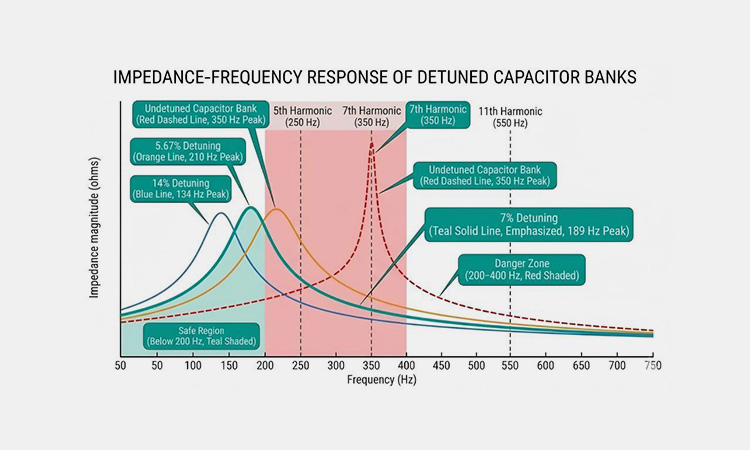
Unlike line reactors to simply add line impedance, filter reactors can specifically shift the resonant frequency of the capacitor bank with detuning factors like 5.67%, 7%, or 14%.
To keep the resonant frequency below the lowest dominant harmonic order, the filter reactor can prevent dangerous parallel resonance and filter out the destructive harmonic currents.
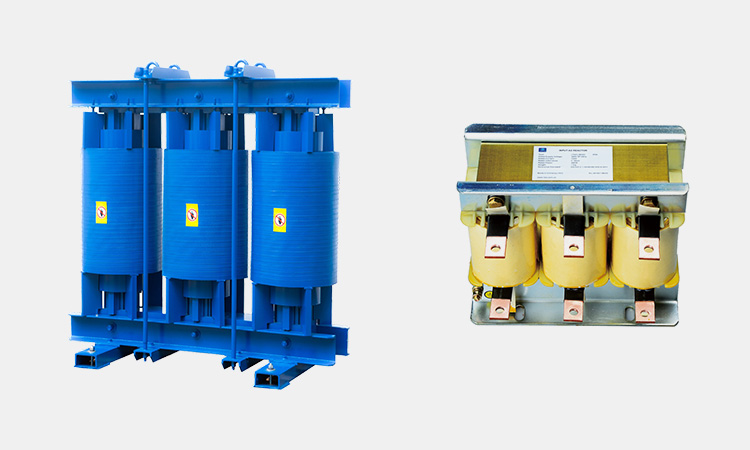
AC Line Reactors vs. Filter Reactors: Key Differences
AC Line Reactors | Filter Reactors | |
Application | Drive Protection | Power Quality & Resonance Prevention |
Main Purpose | Protects individual VFDs from grid surges and dampens drive-generated noise. | Protects PFC capacitor banks, stops dangerous grid resonance, and reduces THDi to meet strict compliance. |
Best For | Front-end VFD protection | Harmonic mitigation and power quality compliance |
AC Line Reactor
When wired directly at the input terminals (U1, V1, W1), AC line reactors are connected in series with an individual VFD or AC drive controller.
They can suppress voltage surges from the external grid and help limit current spikes from the VDF itself.
Filter Reactor
Directly installed inside a Power Factor Correction (PFC) panel or a dedicated passive harmonic filter assembly, the filter reactors are wired in series with capacitors.
They can safeguard your capacitor bank and effectively absorb the targeted harmonic currents.
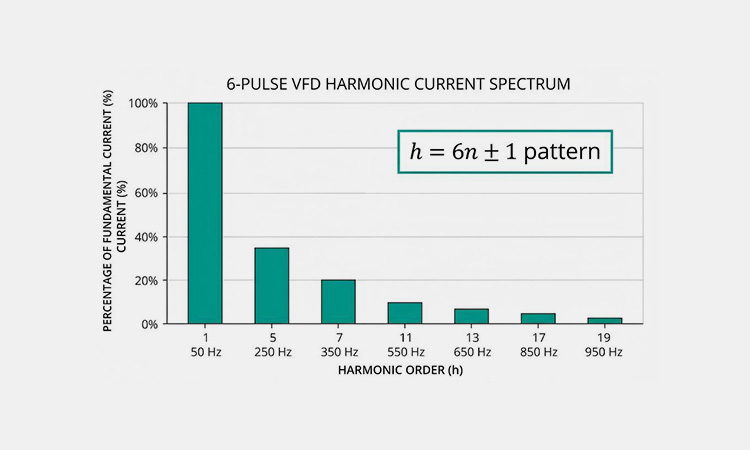
While AC line reactors can reduce harmonics, they cannot meet stringent environmental/grid standards.
In contrast, filter reactors, acting as “professional purifiers” for the power grid, can precisely target specific harmonics and easily reduce them to below the most stringent industry compliance standards (below 5%).
AC Line Reactor | Filter Reactor | |
Harmonic Reduction | Moderate baseline harmonic reduction. | Absorbs targeted harmonic frequencies (5th, 7th, 11th). |
THDi Reduction Range | Lowers THDi from ~80% down to 30% ~ 45%. | Suppresses THDi levels down to under 5% ~ 10%. |
Compliance | Cannot meet strict standards (like IEEE 519 < 5%) on its own. | Can easily meet or comply with strict grid standards. |
AC Line Reactor (Impedance)
Generally, an AC line reactor is rated by Percent Impedance (%Z). It refers to the percentage of the system’s rated voltage drop when the full-load rated current passes through the reactor.
3% Reactor: The reactor produces a 3% voltage drop at full rated current.
4% Reactor: The reactor produces a 4% voltage drop at full rated current.
Filter Reactor (De-tuning Factor)
In contrast, the filter reactor is rated by a De-tuning Factor (%). It refers to the ratio of the inductive reactance ($X_L$) of the reactor to the capacitive reactance ($X_C$) of the capacitor. The formula is:
$$p\% = \frac{X_L}{X_C} \times 100\%$$
With the detuning factor, you can control the resonant frequency below dangerous harmonic frequencies.
Common filter reactor ratings are:
- $p = 7\%$ ($f_r = 189\text{ Hz}$ at 50 Hz): Blocks the 5th harmonic ($250\text{ Hz}$) and above.
- $p = 14\%$ ($f_r = 135\text{ Hz}$ at 50 Hz): Handles 3rd harmonic currents ($150\text{ Hz}$).
- $p = 5.67\%$ ($f_r = 210\text{ Hz}$ at 50 Hz): For higher-frequency de-tuning applications.
The daily processing of large amounts of harmonic waste needs careful design of the filter reactor, so we need to take into account the following two factors:
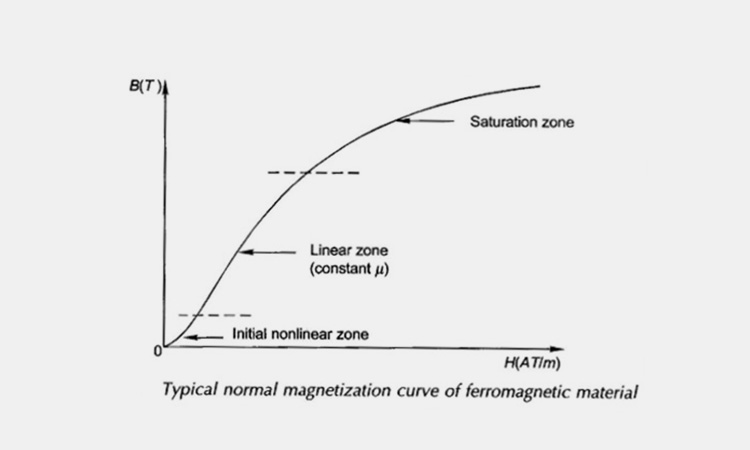
High Linearity (150% ~ 200% or higher)
Even under severe harmonic overload, the filter reactor core must never saturate. Saturation reduces the reactor’s inductance, significantly weakening its harmonic suppression capabilities.
Thermal Micro-switches
Harmonic currents cause resistors to heat up, leading to heat loss. Therefore, to ensure high filter reactor quality, a normally closed (NC) thermal switch (typically operating between 95°C and 140°C) must be integrated into the center coil. This switch monitors the coil temperature in real time, preventing burnout and damage to the equipment and system.
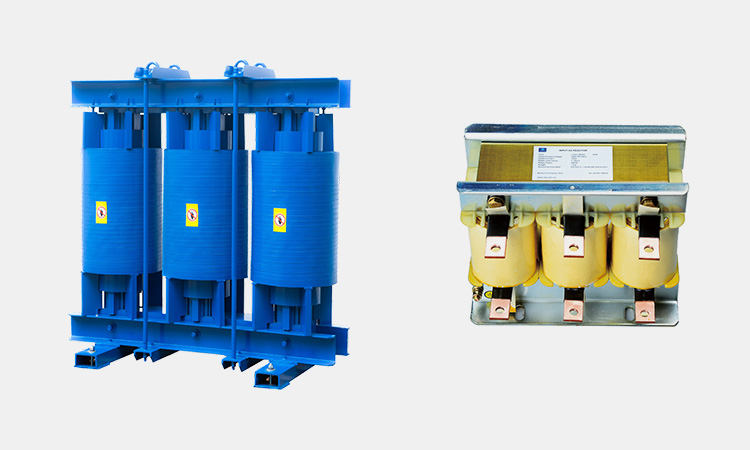
Key differences:
AC Line Reactor (Input Reactor) | Filter Reactor (Detuned Reactor) | |
Primary Objective | Protect VFDs from surges; mitigate base noise. | Prevent capacitor resonance; filter low-order harmonics. |
Installation Point | Series connection at VFD input. | Series connection with PFC capacitors. |
Rating Terminology | Percent Impedance (2%, 3%, 5%). | De-tuning Factor $p\%$ (5.67%, 7%, 14%). |
THDi Performance | Reduces THDi to $\sim30\% – 45\%$. | Reduces THDi to $<5\% – 10\%$ (in LC circuit). |
Core Linearity | Standard linear rating ($120\% – 150\%$). | High linearity ($150\% – 200\%+ I_N$). |
Circuit Partner | Standalone magnetic component. | Always paired with PFC capacitors. |
Thermal Protection | Optional / Air cooled. | Integrated thermal switch embedded in winding. |
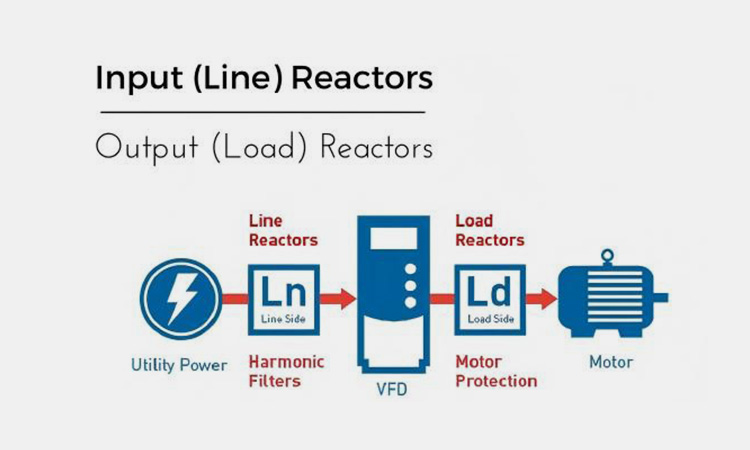
They are different in many ways, including installation locations, core working principle, and purpose.
Installation Locations
Line Reactor: Used upstream between the main power supply and the VFD input.
Load Reactor: Used downstream between the VFD output and the motor.
Core Working Principle & Purpose
Line Reactor: Using an inductive coil to introduce system impedance, the line reactor can absorb voltage spikes and surges from the external grid and protect the front end of the VFD.
Load Reactor: By smoothing out the fast-switching PWM edges, the load reactor can effectively protect the motor insulation from high-voltage pulses.
Overall Electrical Path
$$\text{AC Line} > \text{Line Reactor} > \text{VFD} > \text{Load Reactor} > \text{Motor}$$
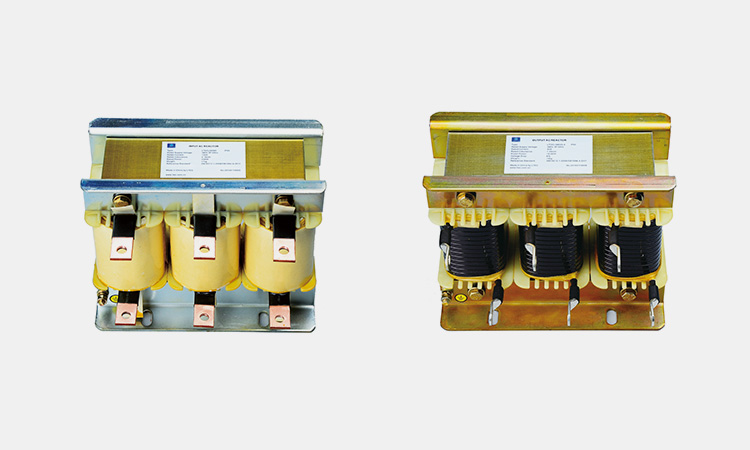
So when to choose the input/line reactor, and when to use the output/load reactor? Here is a quick reference.
Input / Line Reactor
If you are experiencing incoming utility transients, capacitor switching surges, or frequent VFD over-voltage trips, then a line reactor is a good choice.
Output / Load Reactor
Take a load reactor immediately if your cable distance between your VFD and motor exceeds 30–50 meters, or the motor runs hot.
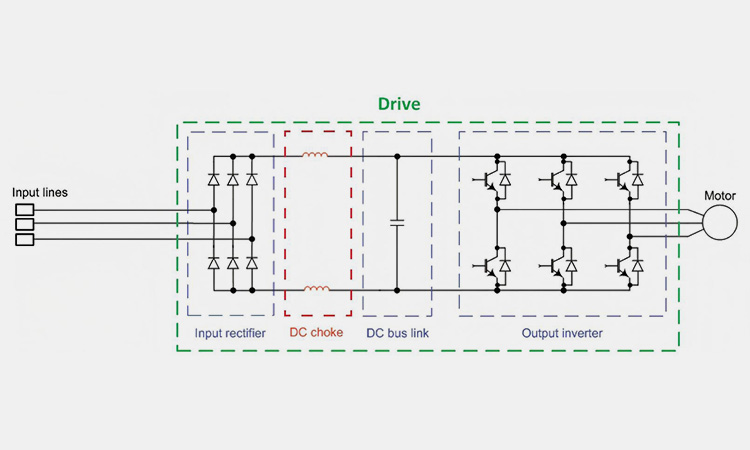
As an inductor used inside the DC bus section of a VFD, the DC link choke is installed between the rectifier and the bus capacitors.
Providing the same harmonic reduction as a 3% AC incoming line reactor, but it will not cause a voltage drop on the AC side. However, its drawback is equally obvious. The DC link choke cannot protect the rectifier bridge from incoming AC line surges.
You can choose an AC line reactor when:
- You need an economical solution to protect VFD from voltage spikes.
- If multiple drives operate on a single power line with cross-talk or trip issues.
- You want to extend your drive rectifiers and DC bus capacitors’ service life.
- Grid harmonic not strictly compliant with the local utility.
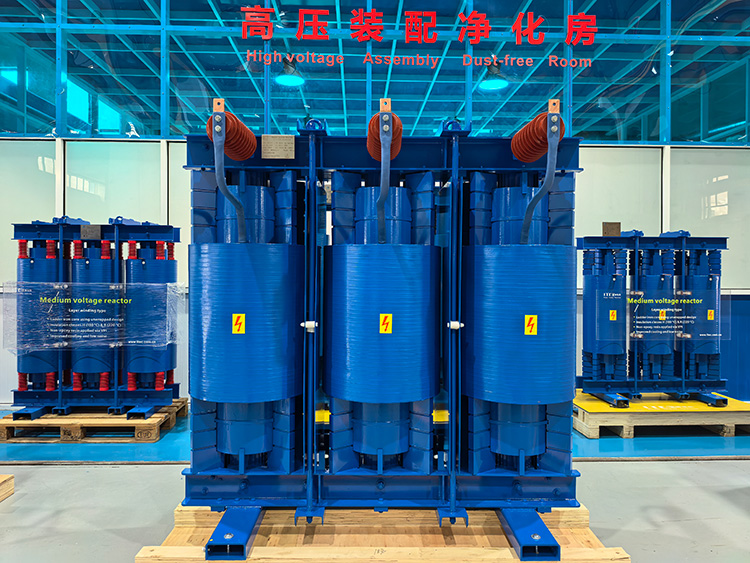
The detuned filter reactor is a must when:
- You are installing or want to upgrade Power Factor Correction (PFC) capacitor banks with VFDs.
- Capacitors inside the panel are overheating, blowing fuses, or bulging due to harmonic resonance.
- You need to comply with IEEE 519-2022 or local utility harmonic distortion limits
- Handles heavy non-linear loads in industrial plants, water treatment facilities, or commercial HVAC networks.
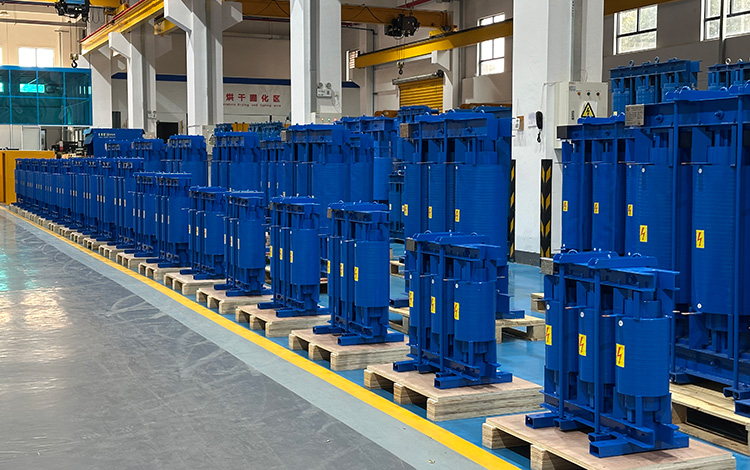
To help deliver long-term power stability for extreme industrial duty, our harmonic filter reactors are engineered with:
High Linearity
By building linear inductance up to $200\%$ of rated current, our filter reactor ensures you experience no magnetic saturation during harmonic spikes.
Low Power Losses
Engineered with premium low-loss magnetic steel laminations, it delivers low power losses.
Quiet Operation
Vacuum-impregnated with Class H ($180^\circ\text{C}$) insulation, you can have a quiet operation of $<60\text{ dB}$.
Maximum Thermal Control
Embedded with microswitch temperature sensors, your grid power can get real-time overheating protection.
Custom Voltage & Detuning Formats
We deliver custom voltage and detuning designs according to your specs, including 5.67%, 7%, and 14% detuning factors across $230\text{V}$, $400\text{V}$, $440\text{V}$, $480\text{V}$, and $600\text{V}$ electrical systems.