1. Why do our circuit breakers trip frequently for no apparent reason?
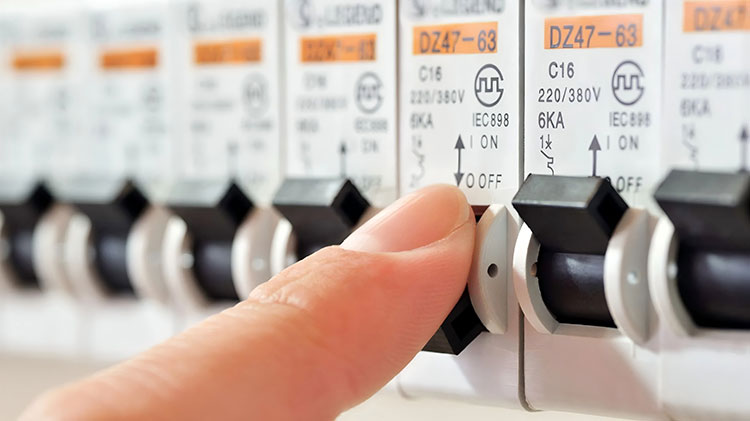
Circuit breakers trip-sourced: mirskyelectric
When a breaker trips, you may assume that there is a short circuit or a massive overload.
After checking, you will find harmonics clogging your grid instead. Even if equipment draws a safe amount of current, the harmonic distortion will damage your sensitive thermal elements inside the breaker, into thinking the system is overloaded.
It is not your machine’s fault. There is just too much invisible garbage in your power line, causing nuisance tripping.
2. Our new cables and motors aren’t overloaded, so why are they running scorching hot?

Cables overheating-sourced: cable-world
When normal electricity flows through a cable, the traffic moves smoothly across all lanes of a wide highway. However, harmonic currents operate at high frequencies and suffer from a nasty habit called the “Skin Effect.”
Harmonic currents always crowd entirely along the outer surface, instead of traveling through the spacious center of the copper wire. Then, they will narrow your “highway,” and force all the electrical traffic into the breakdown lane.
So, the friction creates massive heat that bakes your cables and degrades insulation. In the end, your motor life will be drastically shortened.
3. Why is our workshop transformer humming loudly and risking a burnout?
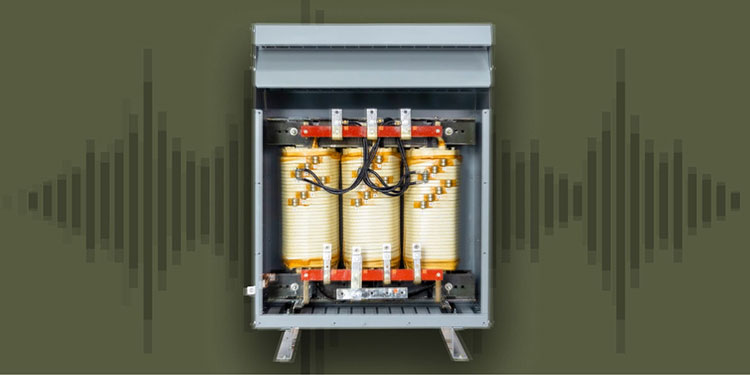
Workshop transformer humming-sourced: maddox
The transformer is the heart of your factory. If polluted phase currents rich in harmonics enter the transformer, they will be transformed into wild, chaotic currents called “eddy currents” within the iron core.
Unable to digest this extra, useless energy, transformers will go through violent internal vibrations (that irritating, high-pitched humming sound) and extreme heat.
If your transformer is trapped in a harmonic environment must be “derated,” then you can only safely use a fraction of its total capacity, wasting your equipment investment.
4. What is the difference between “Linear” and “Non-Linear” loads? What do I have in my facility?
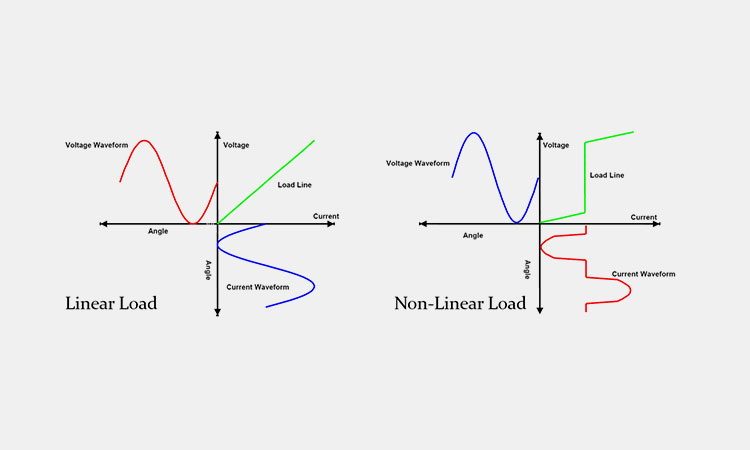
Linear and Non-Linear loads-sourced: powerquality
Linear loads are the “well-behaved citizens” like traditional incandescent light bulbs or standard electric heaters. When the current is in perfect sync with the voltage, its waveform is a beautiful, smooth, and predictable sine wave.
Non-linear loads are disrupters like Variable Frequency Drives (VFDs), welding machines, UPS systems, computers, and LED lighting. However, modern automation needs them. Not drawing current smoothly, biting into the power line like a hungry bird pecking at seeds, they draw current in sharp, sudden gulps. So, the perfect sine wave is turned into a jagged, heavily distorted monster.
5. What is a “Harmonic”?
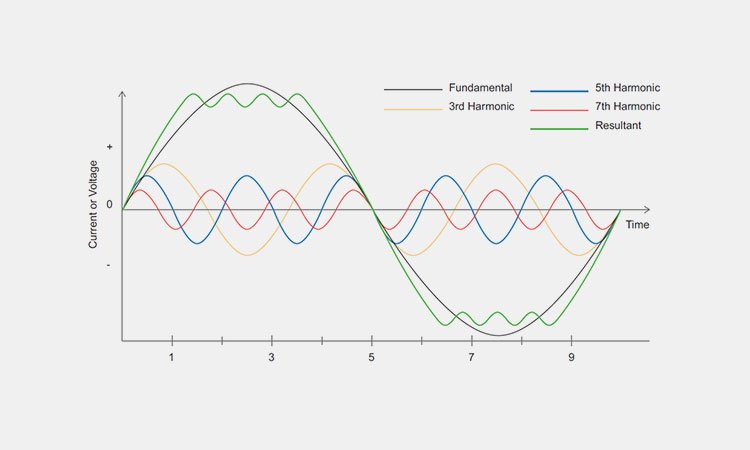
What is a “Harmonic”-sourced: pqcomponents
Clean electrical power (50Hz or 60Hz) is pure and like a beautiful melody played by a single instrument. However, harmonics are the discordant noise and static overlapping that melody.
A 3rd harmonic is a buzzing noise that is three times faster than the main tune.
The 5th and 7th harmonics are five and seven times faster.
If the harmonics disturb your power, then there will be Total Harmonic Distortion (THD).
6. Why are Variable Frequency Drives (VFDs) both energy-saving heroes and harmonic villains?
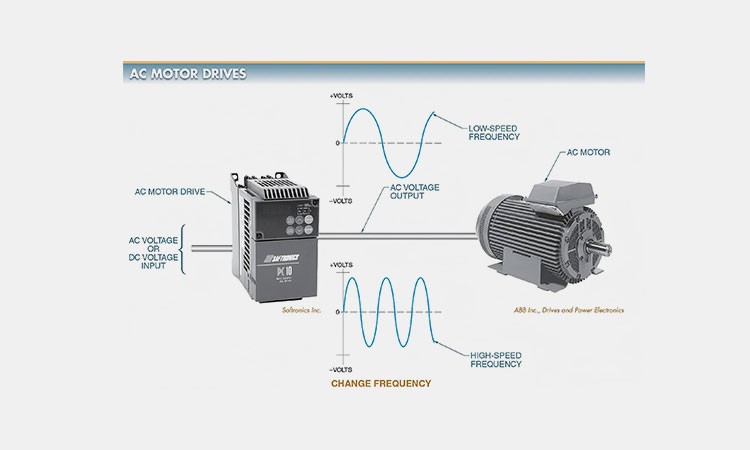
Variable Frequency Drives-sourced: electricala2z
VFDs save massive amounts of energy by precisely controlling motor speeds. However, they also adjust that speed. Relying on internal semiconductor valves (IGBTs or diodes) that open and close thousands of times per second, VFDs alter the motor speed.
But they also create a massive backwash of turbulent, irregular electrical pulses. Acting like a “harmonic smoke machine,” VFDs blow electrical pollution backward into your factory’s local power grid.
7. What is the Point of Common Coupling (PCC), and why does the utility company issue penalties for it?
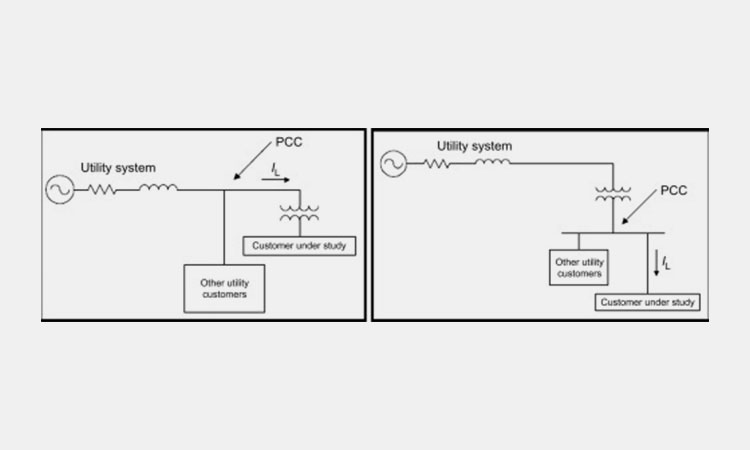
What is the Point of Common Coupling (PCC)-sourced: sciencedirect
The PCC is essentially the shared main gate where your factory’s electrical system hooks up to the public utility grid. If there is harmonic garbage inside your facility and you do not trap it, the harmonics will leak back out through the main gate. In the end, they will pollute the grid for neighboring factories and residential buildings.
Standards like IEEE 519 are strictly enforced by power companies. If your facility is caught dumping excessive harmonics into the public grid, then you will face heavy fines, forced mitigation deadlines, or even complete power disconnection.
8. How do harmonics tank my Power Factor and skyrocket my electricity bills?
Low power factor triggers utility penalties. To get rid of that, in the past, companies put capacitor banks on the system to fix it. However, this is not working anymore today.
Harmonics introduce a hidden parasite called “Distortion Power.” If you do not trap them, they only do absolutely zero useful work and consume massive amounts of grid capacity (inflating your Apparent Power).
Due to the distortion, your True Power Factor plummets. In the end, you end up paying heavily for “phantom electricity” while simultaneously getting slapped with low-power-factor penalties.
9. How does the notorious “3rd Harmonic” quietly burn down neutral wires?
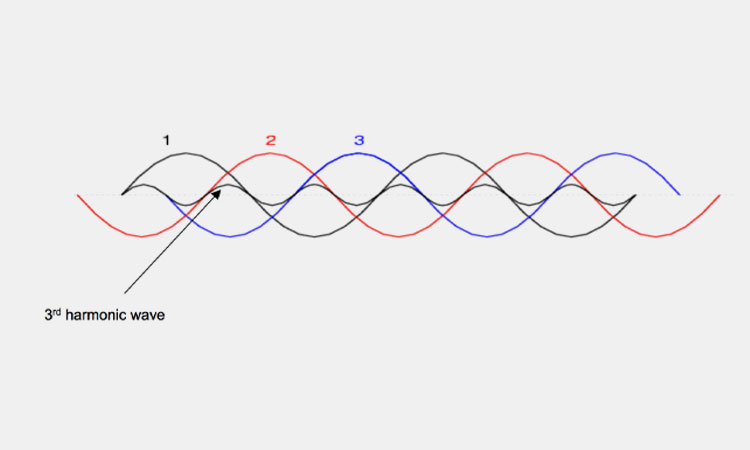
3rd Harmonic-sourced: controllix
In a standard three-phase system, usually canceling each other out, currents leave the neutral wire completely safe and carrying almost zero current.
However, instead of canceling out, the 3rd harmonics perfectly align and pour directly into the neutral wire together, adding up. Even if your power lines are completely un-overloaded, the neutral wire could quietly be carrying 2 to 3 times the current.
So the neutral wires overheat silently, melting down and creating a severe fire hazard.
10. What does a Line Reactor do as our “First Line of Defense”?
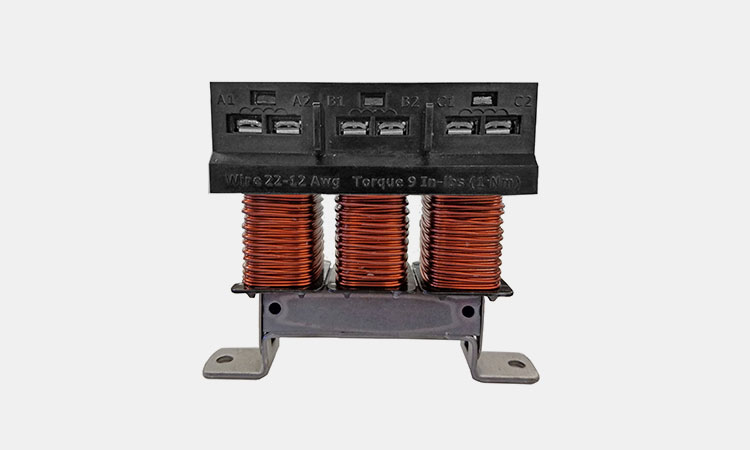
What does a Line Reactor do as our “First Line of Defense”-sourced: wolfautomation
A line reactor is always your simplest and most budget-friendly option.
As a “speed bump” installed right before your VFD, the line reactor acts as a shock absorber instead of eliminating harmonics. Flattening dangerous voltage spikes, they protect your drives from grid surges and tames your VFD’s current distortion (THD-I) down to a manageable 35% range.
If you have tight budgets and mild harmonic issues, then the line reactor is perfect for your facilities.
11. What is a K-Factor transformer, and how does it differ from a standard transformer?
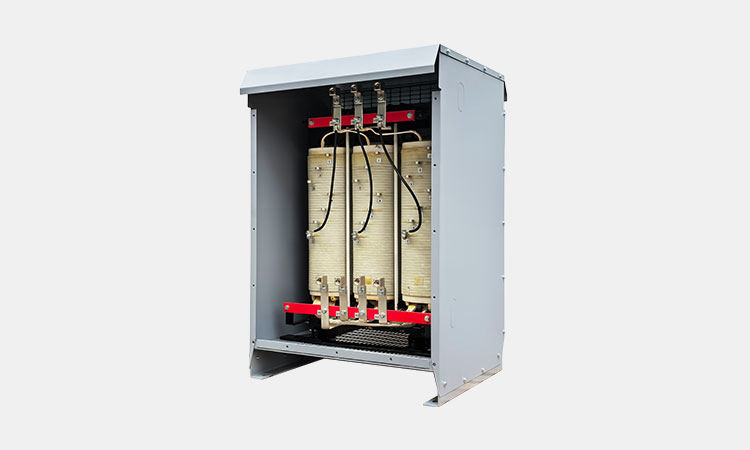
K-Factor transformer-sourced: LTECPower
Forced to run heavy VFD loads, the standard transformer will overheat and experience a shortened lifespan due to harmonic eddy currents.
However, designed specifically for high-harmonic environments, the K-factor type is a “heavy-duty, boxer-class transformer.”
Built with an upgraded, heavy-duty core cooling, the K-factor transformer uses thicker, multi-stranded bundled conductors to defeat the Skin Effect.
Do not destroy harmonics; the K-factor transformer comfortably co-exists with massive harmonic loads and ensures your factory’s main power distribution remains rock-solid.
12. Passive Filters vs. Active Harmonic Filters (AHF) – How do I choose?
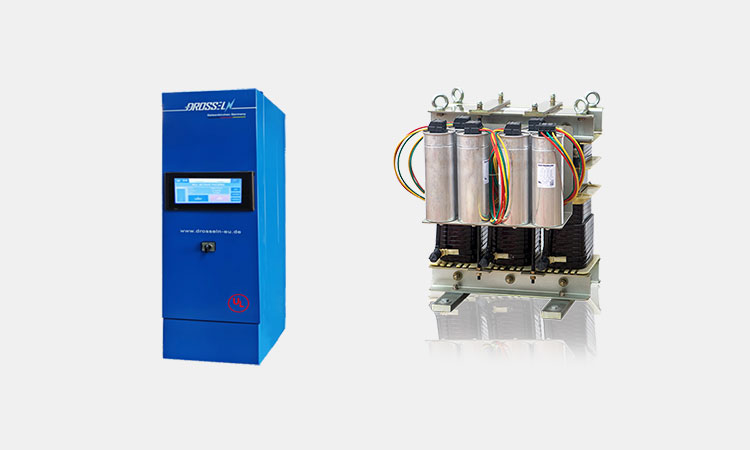
Passive Filters vs. Active Harmonic Filters-sourced: LTECPower
The passive filters and active harmonic filters work differently. So they help you differently.
Passive Filters: The Stationary Trap
Built with capacitors and inductors, the passive filters are highly cost-effective. Working like a fixed animal trap set for a specific target, if your factory suffers badly from 5th harmonics, then passive filters trap exactly that frequency.
However, they are inflexible. If your factory’s load changes or the harmonic frequency shifts, the filters will miss the target. Occasionally risking resonant issues with the grid, the passive filters are best for factories with fixed, unchanging production lines.
Active Harmonic Filters: The Active Counter-Attack
Operating like “noise-canceling headphones” for your power grid, the active harmonic filters are the high-end power electronics at their finest. Armed with high-speed processing chips, they monitor your harmonic pollution in real-time.
Once spotting a 5th or 7th harmonic waveform, the active harmonic filter will inject an equal and opposite current in less than a millisecond to completely neutralize the garbage.
Though they crush current distortion (THD-I) down to a near-perfect level below 5%, their initial cost is higher. So if you are free with budget and your factory loads change, then the active harmonic filter is your best choice.
13. Why is there no “Single Best Product,” only a “Smart Hybrid Solution”?
Your ultimate harmonic mitigation solution is always a tailor-made, hybrid mitigation strategy. The hybrid approach delivers you a pristine, green power grid while keeping your hardware budget highly optimized.
For initial trapping, you can install an affordable line reactor at each small VFD and use an isolation transformer to seal away 3rd harmonics in problem zones. For final precision cleaning, you can choose a highly optimized active filter at the main incoming service entrance.
Summary: The Plant Manager’s Financial Ledger
Harmonic mitigation is actually a high-yield production investment. With the professional power quality solutions, you will get:
20%–30% Longer Equipment Lifespan
Your motors will stop overheating, your cables will not melt, and your VFDs will stop experiencing mysterious lockups.
Zero Downtime Losses
Your circuit breakers will never have unexpected trips that bring entire assembly lines to a costly halt.
A Drastically Reduced Power Bill
By bringing your power factor safely back above 0.95, your utility penalties will be drastically cut!
Every day you delay harmonic mitigation, the “invisible garbage” will chew away your motor life and inflate your electricity bills.
Send us your current single-line diagram. Our engineers will help design a high-ROI hybrid solution to bring your power factor back to 0.95+ and save your equipment from silent burnouts. Reach out now!