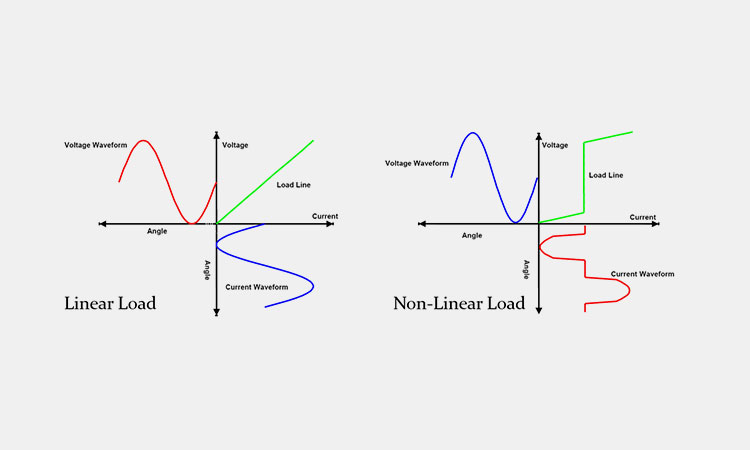
Non-linear VFD loads require impedance-sourced: powerquality
Standard AC motors draw power smoothly. However, VFDs are non-linear loads. They draw power in sharp, high-amplitude pulses, known as “rabbit-ear” waveforms.
These sharp spikes may create harmful harmonics. If without enough input resistance, your system may face 3 risks:
High THID
Current distortion can exceed 80%, distorting the voltage across your line.
Overheating
The extra heat they produce will damage your upstream transformers and cables.
Nuisance Tripping
Unstable voltage will trip breakers and drives for no reason, causing you a big problem.
So, you need line reactors to correct the problems. Because the calibrated line reactor acts like a cushion. It smoothes the “rabbit ears” into a safe, continuous wave.
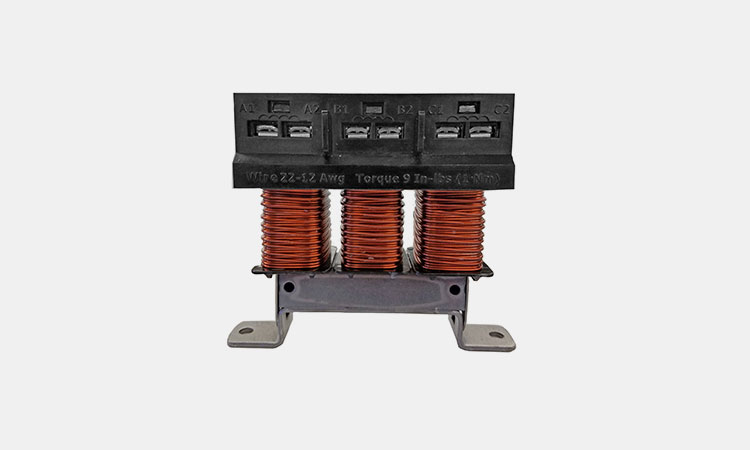
AC Line Reactors-sourced: wolfautomation
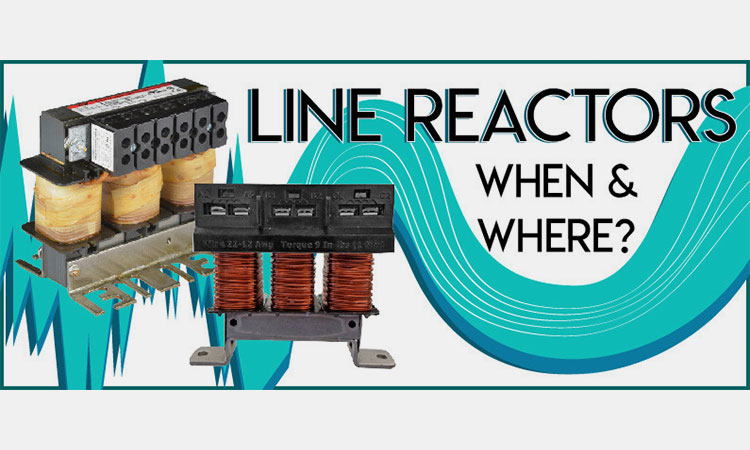
Installed right before your VFD, an AC line reactor is a 3-phase inductor. Sitting directly between the incoming main power and the drive’s input, it acts like a frontline “bodyguard.”
Physically, built with copper or aluminum wires wrapped around a laminated steel or iron core, by nature, it strongly opposes rapid changes in current.
Working like a heavy filter, the AC line reactor blocks and absorbs dangerous high-frequency power spikes and lightning surges from the grid, ensuring you only get safe, smooth power entering VFDs.
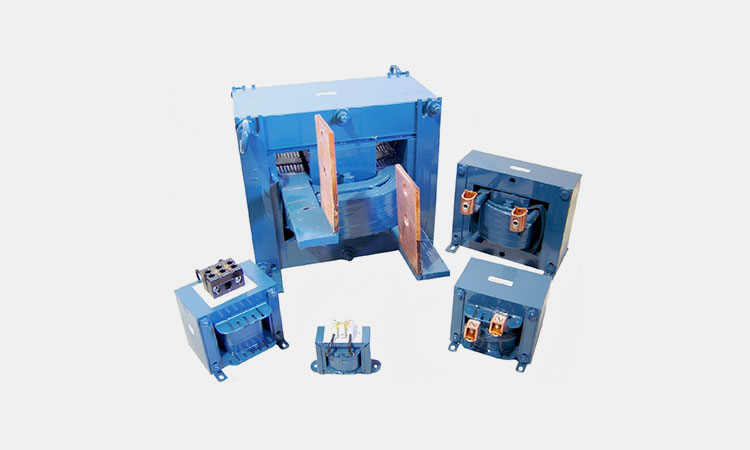
DC Link Choke-sourced: mtecorp
Also called a DC Bus Choke, a DC Link Choke is an inductor. It is installed inside the VFD chassis. Sitting right in the middle of the drive’s internal DC circuit, the reactor acts like a built-in “water filter.”
It is available as a single inductor or a dual filter for the positive and negative rails. Instead of filtering outside AC power, the reactor focuses on the internal rectified DC power.
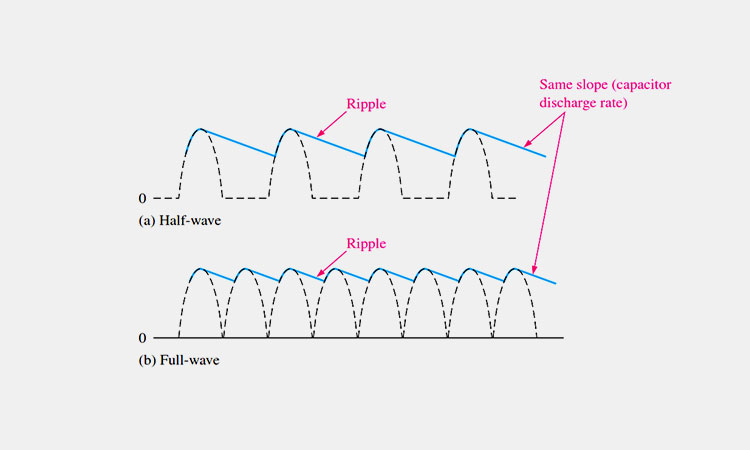
Their job is to smooth out the messy voltage ripples and high-frequency noise caused by the VFD’s rapid switching (IGBT and PWM loops) and keep your internal drive power perfectly stable.
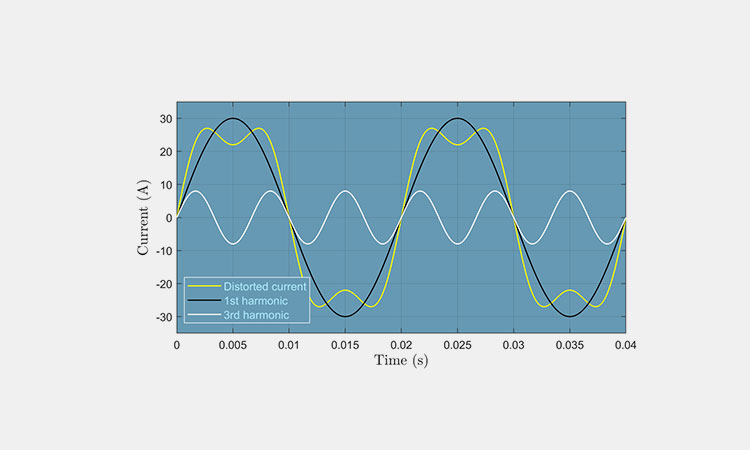
Harmonic Mitigation-sourced: media
When comparing harmonic reduction, the reactor’s performance depends on the filter’s strength, typically rated at 3% or 5% impedance.
Here is how they match up against different harmonic “pollutants”:
Big Pollutants (5th & 7th Harmonics)
A 5% DC link choke wins here. Filtering power right at the internal source, the reactor highly efficiently crushes the heavy 5th and 7th harmonic spikes before they can reach your main power line.
Small & High-Frequency Noise (11th & 13th Harmonics / EMI)
An AC line reactor is the winner. With a unique magnetic design, it gets stronger as the frequency increases. Before annoying high-frequency electrical noise and radio interference (EMI) affect your upstream equipment, the reactor can trap it with a massive shield.
Transient Surge Protection-sourced: electronicsbeliever
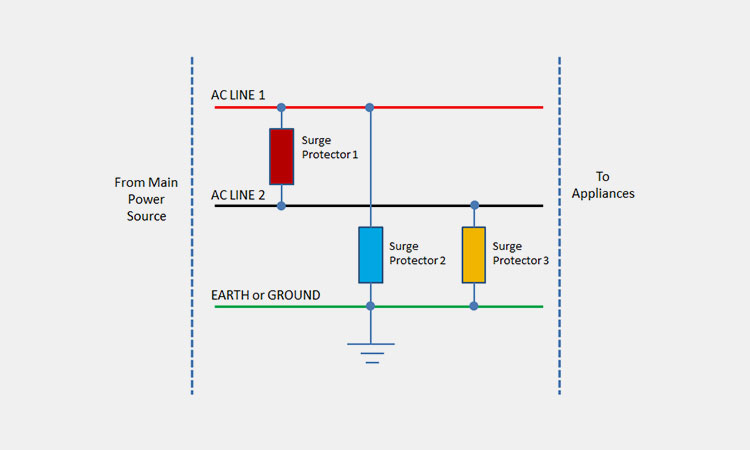
They differ in your VFD’s survival. Where you place the filter determines what it can protect.
AC Line Reactor (The Frontline Shield)
The AC line reactor will act like a rugged “bodyguard” if you place it directly between the grid and your drive. If there are dangerous lightning surges or utility voltage spikes strike, the AC reactor will absorb the shock first, then directly shield your VFD’s sensitive input parts from burnout.
DC Link Choke (Internal Protection Only)
The DC link choke will not provide protection against external power surges if it is installed deep inside the VFD. Before the surge ever reaches your internal DC choke, the incoming high-voltage spikes will destroy your VFD’s input parts.
DC Bus Stability-sourced: springernature
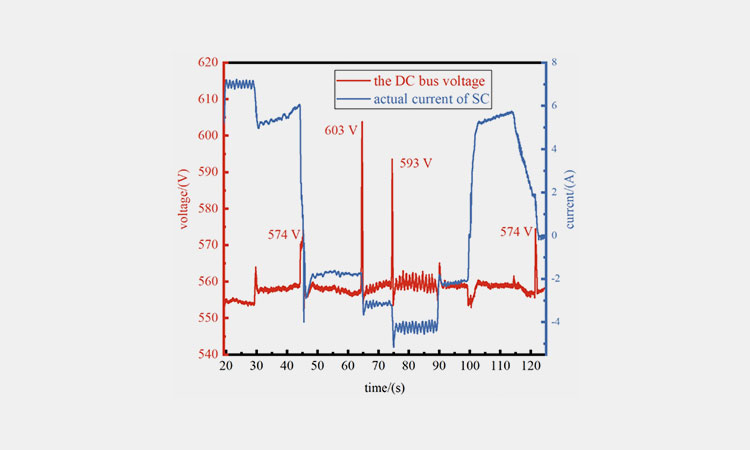
There is always a tradeoff between power efficiency and voltage loss if you add impedance to your system. Here is how they compare under heavy load:
The AC Reactor Penalty (Voltage Drop)
An AC reactor sits on the 3-phase line. So it acts like a slight restriction. A 5% AC reactor can reduce voltage by up to 5% under full motor load. It means less voltage reaches your motor. In the end, it can weaken your motor torque or cause unexpected under-voltage trips if your grid dips.
The DC Choke Advantage (High Efficiency)
There is almost zero internal resistance from a DC link choke. Its voltage drop is negligible, even less than 1%, because it filters smoother DC power inside the drive. So, your internal voltage remains at maximum, and your VFD delivers 100% of the motor’s power and torque even during peak production.
Phase Asymmetry-sourced: se
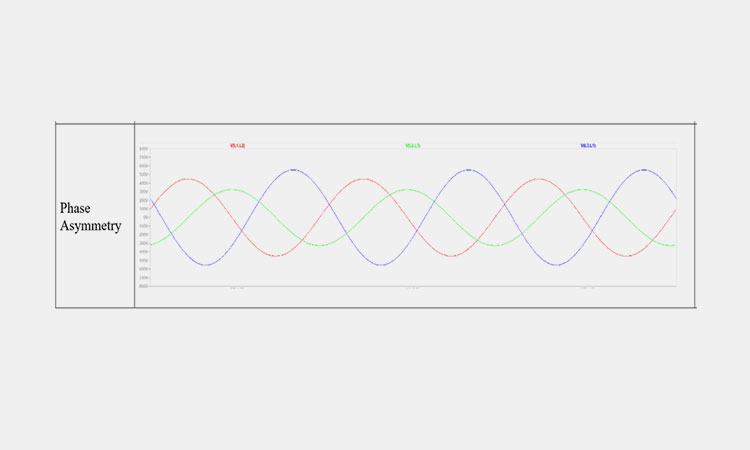
When the 3 incoming lines have unequal voltages, your main power grids often face an input phase imbalance. So the asymmetry is a silent killer for 3-phase VFDs.
Why Do DC Chokes Fail Here?
The VFD rectifiers draw highly unequal currents when voltages are unequal. The line with the highest voltage carries almost the entire load. It will overheat specific input components. The DC choke handles the power after it has already passed through the rectifiers. So it cannot balance incoming phases.
Why AC Reactors Excel?
The AC reactor adds balanced resistance to each of the 3 phases. The reactor coil automatically creates a larger voltage drop on Phase A if Phase A has a higher voltage and draws more current. So this smart, self-regulating feedback actively balances the incoming current. It also saves your input components and extends drive life.
To support procurement and engineering decisions, the table below compares key technical performance metrics based on IEEE 519 and EN 61000-3-12.
Technical Performance Metric | 3% – 5% AC Line Reactor | 3% – 5% DC Link Choke |
Primary Placement | External (Line Side / Input) | Internal / Built-in (DC Bus) |
THID Mitigation (Typical) | Attenuates to approx. 35% – 45% | Attenuates to approx. 25% – 40% |
Surge / Lightning Protection | Excellent – Protects your VFD input rectifiers from grid spikes | None – Input diodes exposed |
Voltage Drop (Fundamental) | High (3% to 5% drop at full load) | < 1% (Negligible) |
Phase Unbalance Compensation | Yes – Actively balances input line currents | No |
Footprint & Integration | Requires external panel space and extra wiring | Built-in, saves space |
Thermal Dissipation | High external heat load – requires cooling consideration | Managed by VFD’s internal cooling |
Nuisance Trip Prevention | High protection against neighboring VFD switching noise | Moderate – stabilizes the internal bus |
VFDs-sourced: plcautomationgroup
What is the common cause of VFD burnout? The answer is a small drive connected to a massive facility transformer. In the electrical industry, this is called a “Stiff Power Grid.”
From Rockwell Automation guidelines, your network has almost zero natural resistance if your upstream transformer capacity is 10 to 20 times larger than your VFD’s rating. Nothing can stop the peak current when you power up or hit a voltage spike.
Your giant current wave will slam directly into the VFD’s internal electronics and instantly blow input fuses. In the end, it will degrade your rectifiers and kill your capacitors if there is no external 3% or 5% AC line reactor to act as a buffer. So, an AC reactor is your absolute primary line of defense for drives under 30 HP on these powerful grids.
Voltage Ripples-sourced: instrumentationtools
The “Weak Grid” will bring stability risks when powerful grids create spike risks.
As Siemens notes, like remote pumping stations or diesel-powered sites, the weak networks have a low Short-Circuit Ratio.
A VFD’s heavy current pulses can distort the line voltage in these weak areas. The hidden danger will emerge if your drive relies solely on a 5% DC Link Choke, like:
AC Line Reactor and a DC Link Choke-sourced: bigcommerce
Yes, absolutely. It is a premium choice for your heavy-duty or mission-critical applications to combine an AC line reactor and a DC link choke. A 3% AC line reactor plus a built-in DC link choke gives you the best of both worlds:
Frontline Protection
The AC reactor blocks grid voltage spikes and balances incoming power phases.
Deep Filtering
The DC choke smooths internal voltage ripples, letting your VFD deliver maximum torque.
But Do Not Over-design
You will get no extra harmonic reduction if your total combined impedance exceeds 7% to 8%. Instead, you will cause excessive voltage drops. It will generate too much wasted heat and waste your budget.
Isolation Transformer-sourced: iqsdirectory
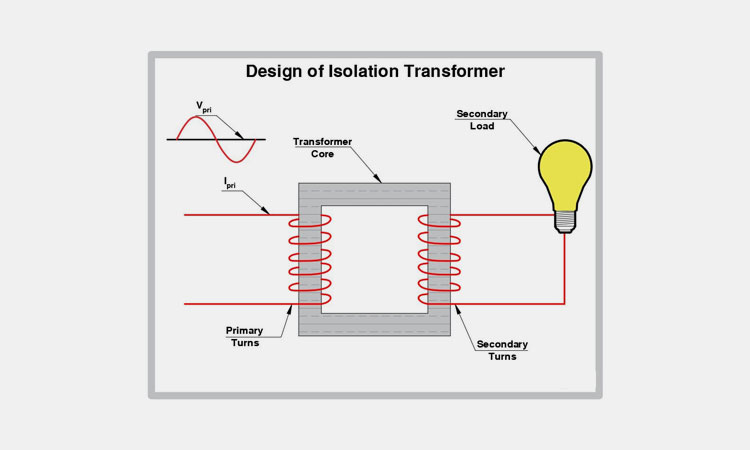
In the past, engineers mainly used large, expensive Isolation transformers to block electrical noise and cross-talk when they upgraded old DC drives to modern AC VFDs. However, modern design paradigms used by brands like Yaskawa, they now replace those heavy transformers with a 5% AC line reactor in most applications. And you can follow too.
The modern AC drives no longer need physical isolation by using smart IGBTs and electronic ground detection. So, choosing the AC line reactor instead of a giant transformer will bring you:
70% Weight Reduction
The AC line reactor will cut your system weight drastically, making shipping and installation a breeze.
Saves Panel Space
For space control, the reactors allow you to use much smaller, compact control enclosures.
Lowers Heat
The reactors can save your air conditioning costs by minimizing the heat load inside your cabinet
Saves Massive Budget
Fully meeting global harmonic standards, it drastically reduces your costs.
To help your engineering and purchasing teams make rapid, technically sound choices, use this definitive application matrix:
If Your Application Has… | Recommended Mitigation Component | Main Engineering Reason |
A giant transformer + a small VFD | AC Line Reactor (3% – 5%) | Stops peak current from killing capacitors. |
Unbalanced phase voltages | AC Line Reactor (3% – 5%) | Actively balances line currents; saves your input diodes. |
Zero extra space inside the cabinet | DC Link Choke (Internal) | Built inside the VFD chassis, saves space. |
High lightning / Surges risks | AC Line Reactor (3% – 5%) | Acts as a front-line shield to protect your VFD. |
Need for absolute maximum motor torque | DC Link Choke (3% – 5%) | Low voltage drop (<1%) keeps the output voltage high. |
Strict IEEE 519 compliance | Combined AC Reactor + DC Choke | Affordable drops THID to 20%-25%. |

Custom Reactor Checklist-sourced: flaticon
It leads to size mistakes if you simply ask for an “AC Line Reactor.” So to make a fast, accurate custom quote, your RFQ must specify these 4 engineering numbers:
Rated Current (Amps)
Without overheating (Class H insulation, safe to 180°C), the continuous current the reactor must carry under full load.
Grid Frequency (Hz)
Is your power grid 50 Hz or 60 Hz? A 60Hz reactor will lose filtering efficiency on a 50Hz grid.
Inductance Value (mH)
What is your inductance per phase goal to achieve your target impedance, such as 3% or 5%?
Nominal Line Voltage (V)
Tell our factory the dielectric insulation and clearance you require, and specify your operating voltage (e.g., 230V, 460V, 575V, 690V).
There is no right or wrong. It depends entirely on your factory needs:
AC Line Reactor
If you need robust, frontline protection against lightning, voltage spikes, and unbalanced grid phases, you can choose an AC reactor.
DC Link Choke
If your panel space is tight and you cannot afford even a 1% voltage drop, then the DC choke is the right choice.
Use Both
You can use both if you need them for heavy-duty, mission-critical systems where zero downtime and strict harmonic compliance are mandatory.
Protect Your Equipment Today!
Don’t let noise and power surges crash your production. Contact the LTECPower’s engineering team now to submit your specs and get a custom price quote.